
How to Recognize Early Dementia vs Normal Aging

How to Recognize Early Dementia vs Normal Aging
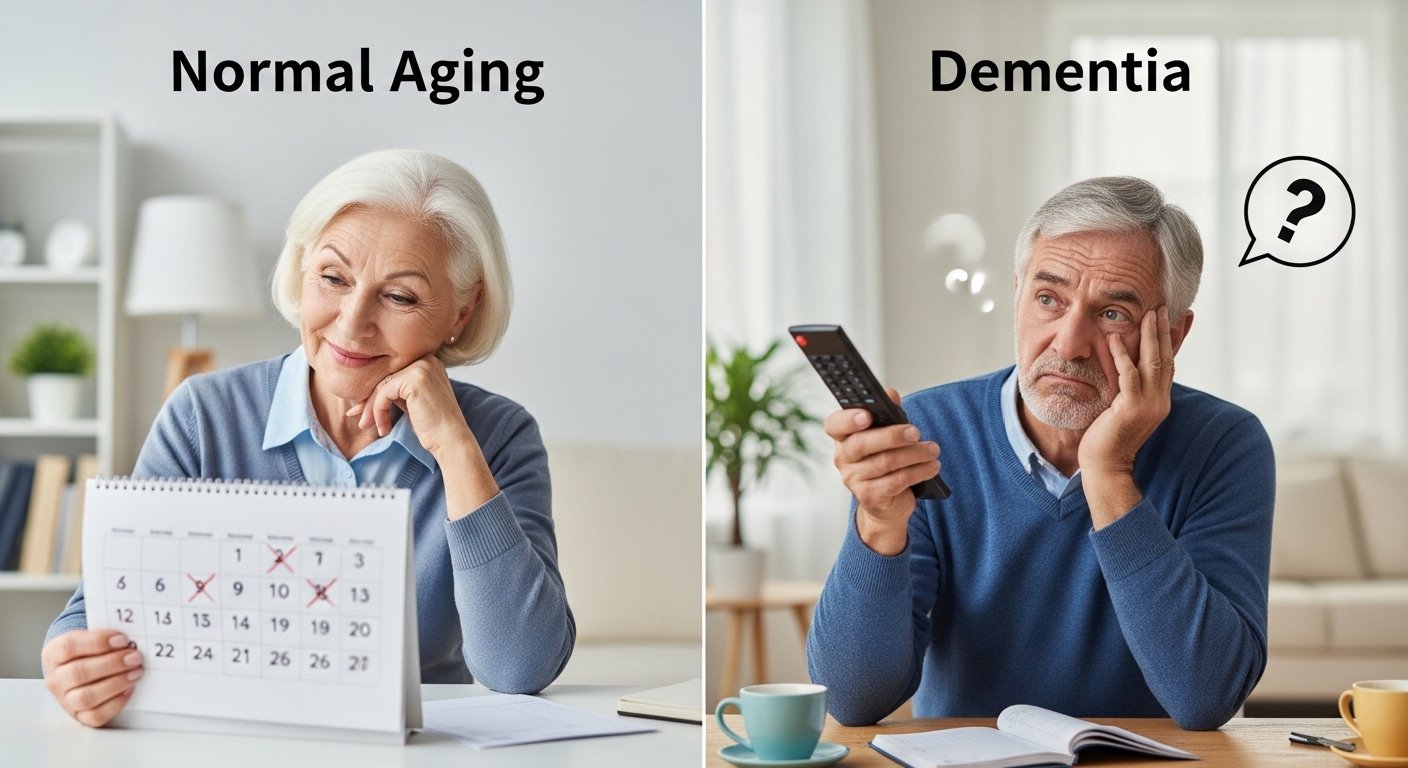
Early dementia vs normal aging is a topic many families search for when memory changes begin to appear. Forgetting where you placed your keys once in a while can be part of normal aging, but repeated confusion, personality changes, and difficulty with daily tasks may be signs of early dementia symptoms. Understanding the difference between memory loss from aging and warning signs of dementia can help you take action sooner.
As people grow older, the brain naturally changes. Slower recall, occasional forgetfulness, or taking longer to learn new technology are common. However, when memory problems interfere with work, relationships, finances, or independence, it may be time to look deeper. Recognizing these signs early can lead to faster diagnosis, better treatment options, and stronger support for loved ones.
In this guide, we’ll explain how to tell the difference between normal aging and early dementia, what symptoms to watch for, and practical steps to protect brain health.
Understanding Normal Aging vs. Dementia
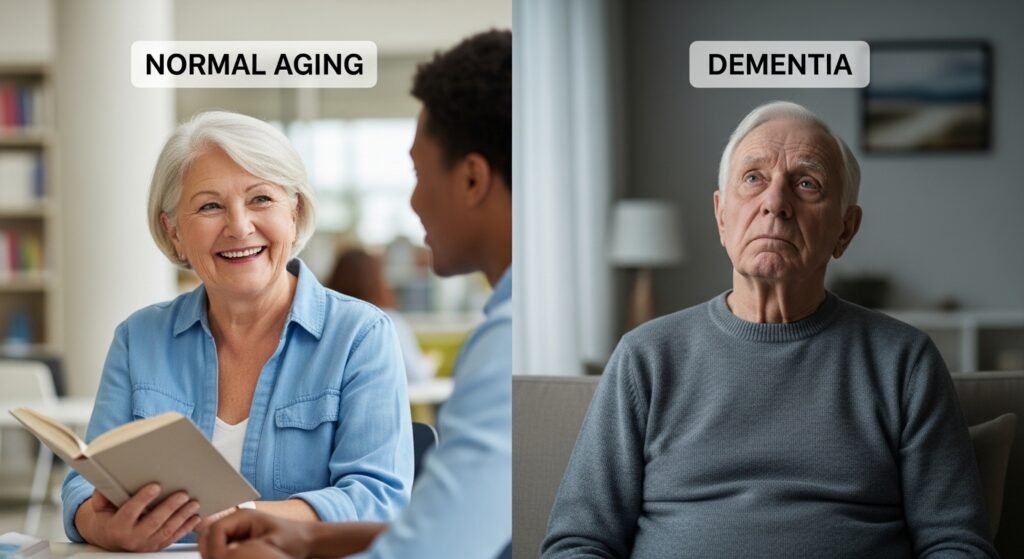
Let’s start with the basics. **Normal aging** includes small, gradual **cognitive changes** that don’t interfere with daily life. These are often called **age-related changes**.
On the other hand, **dementia** refers to a group of conditions that affect memory, thinking, and behavior in a way that can **interfere with daily life**.
Want to stay mentally sharp and support your brain as you age?
👉 Discover a natural solution designed to support cognitive health every day>>>>>Click Here
What Is Normal Aging?
**Normal aging** is a natural process. As the **aging brain** changes, you may notice:
* Slower **processing speed**
* Occasional **memory lapses**
* Mild **forgetfulness**
* Needing reminders more often
These are considered a **normal part of aging** and usually don’t affect independence.
What Is Dementia?
**Dementia** is not just about memory—it involves a decline in **cognitive abilities** that affects everyday activities.
Common types include:
* **Alzheimer’s disease**
* **Vascular dementia**
* Other forms of dementia
People with dementia may struggle with:
* **Short-term memory**
* Language and communication
* Problem-solving
* Completing familiar tasks
The **key difference** is that these issues **interfere with everyday life**.
The Key Difference Between Normal Aging and Dementia
Here’s a simple way to understand it:
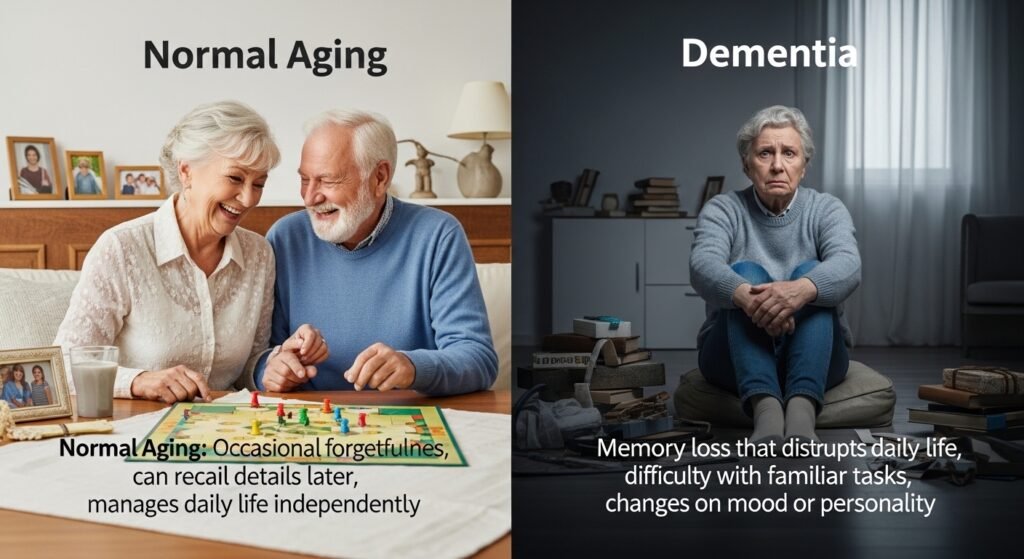
* **Normal aging** → Forgetting occasionally but remembering later
* **Dementia** → Forgetting frequently and not remembering at all
Quick Comparison
Normal Aging:
* Misplacing items but finding them later
* Forgetting names but recalling them eventually
* Making occasional mistakes
Dementia:
* Losing items and unable to retrace steps
* Forgetting close family names
* Repeating the same questions
* Trouble following conversations
The **difference between normal aging** and dementia is not just memory—it’s how much it impacts daily life.
Looking to improve memory and boost focus naturally?
👉 Explore this simple daily formula that supports long-term brain wellness >>>>>Click Here
10 Early Signs and Symptoms to Watch For
Recognizing the **10 early signs and symptoms** can help you spot potential issues early.
Possible Early Signs of Dementia*
* Frequent **memory loss** that disrupts daily life
* Difficulty completing familiar tasks
* Trouble following conversations
* Confusion with time or place
* Poor judgment or decision-making
* Changes in mood or personality
* Withdrawal from social activities
* Problems with words or speaking
* Misplacing items and accusing others
* Loss of initiative
Noticing one or two signs occasionally may not mean dementia—but patterns matter.
Common Memory Changes in Normal Aging
Let’s normalize what’s actually common.
Typical Age-Related Changes
* Taking longer to learn new information
* Occasionally forgetting appointments
* Needing lists or reminders
* Mild **memory concerns**
These **normal age-related memory changes** don’t stop you from living your life.
What Is Mild Cognitive Impairment (MCI)?
Sometimes, people experience something in between.
Mild Cognitive Impairment Explained
**Mild cognitive impairment (MCI)** is a condition where memory changes are noticeable but not severe enough to disrupt daily life.
* You may feel more forgetful than usual
* Others may notice changes
* Daily tasks are still manageable
Not everyone with MCI develops dementia, but it’s worth monitoring.
Factors That Can Affect Memory
Not all memory issues are linked to dementia.
Common Causes of Memory Changes
* Stress and anxiety
* Poor sleep
* Medications
* Lack of physical activity
* Poor diet
* Social isolation
These **factors that can affect memory** are often reversible with lifestyle changes.
Noticing more forgetfulness lately?
👉 Try a natural approach that helps keep your mind active and engaged >>>>>Click Here
How Dementia Progresses Over Time
Unlike **normal aging**, dementia tends to worsen over time.
As the **disease progresses**, people may experience:
* Increasing **memory impairment**
* Difficulty with **everyday activities**
* Changes in personality
* Greater dependence on others
This progression is a key sign that it’s more than **typical aging**.
Real-Life Examples: Normal Aging vs Dementia
Let’s make this real.
Example 1: Normal Aging
You forget where you placed your glasses, but later find them on the table.
Example 2: Possible Dementia
You lose your glasses and accuse someone of stealing them, unable to recall your actions.
Small difference—but big meaning.
Don’t ignore early signs of memory changes.
👉 See how you can support your brain health before small issues grow bigger >>>>>Click Here
When Memory Problems Interfere with Daily Life

This is the turning point.
If **memory problems persist** and begin to:
* Affect work or daily tasks
* Disrupt routines
* Confusion or frustration
…it may be time to seek guidance.
Lifestyle Habits to Support Cognitive Health
Whether it’s normal aging or not, lifestyle plays a significant role in protecting your brain.
Simple Daily Habits
* Stay physically active
* Eat a balanced diet
* Get enough sleep
* Stay socially connected
* **Challenge your brain**
These habits can help reduce the risk of dementia and support long-term wellness.
Practical Tips to Stay Mentally Sharp
You don’t need drastic changes—small steps work.
Try This:
* Read daily
* Learn something new
* Play memory games
* Keep a routine
* Stay curious
Being **mentally engaged** helps your brain stay flexible.
Customer Reviews (Real-Life Style Insights)
Many people who focus on brain health share similar experiences:
* Better focus and clarity
* Fewer memory lapses
* More confidence in daily life
One example:
A woman in her early 60s started walking daily, joining a book club, and improving her sleep. Within months, she felt sharper and more energized.
Consistency—not perfection—makes the difference.
Take control of your brain health starting today.
👉 Check out this trusted support formula and start your journey to staying sharp >>>>>Click Here
Internal Linking :
* [Aging Well]
* [Mental Longevity]
* [Why Sleep Changes After 30]
External Reference :
* National Institute on Aging resources
* Alzheimer’s research organizations
* Brain health and aging studies
FAQs About Normal Aging and Dementia
1. What is the difference between normal aging and dementia?
Normal aging involves mild forgetfulness, while dementia affects daily life and independence.
2. Is memory loss a normal part of aging?
Some memory changes are normal, but significant or frequent loss may need attention.
3. What are the early signs of dementia?
Frequent confusion, difficulty with tasks, and repeated memory issues.
4. Can lifestyle changes reduce the risk of dementia?
Yes, healthy habits can support brain health and lower risk.
5. What is mild cognitive impairment?
A condition between normal aging and dementia with noticeable memory changes.
6. When should I be concerned about memory problems?
When they interfere with daily life or worsen over time.
Conclusion: Awareness Is Your Advantage
Knowing the difference between early dementia and normal aging can make a life-changing difference. While mild forgetfulness is common with age, serious memory loss, confusion, mood changes, and difficulty managing daily life should never be ignored.
Early recognition gives families more time to seek medical guidance, create care plans, and improve quality of life. If you notice persistent changes in yourself or someone you love, speaking with a healthcare professional is the smartest next step.
Improve daily brain performance with scientifically designed memory boosters and wellness products. See our top picks here! >>>>>Click Here
Disclaimer
This content is for educational purposes only and is not medical advice.
Discover more insights on mindful living, mental clarity, and holistic wellness by visiting mindbodyshifts.com.
Explore our latest articles and practical ideas designed to help you create meaningful mind–body balance in everyday life.
One thought on “How to Recognize Early Dementia vs Normal Aging”