
10 Early Signs of Dementia vs Normal Aging: What Every Adult Over 50 Should Know

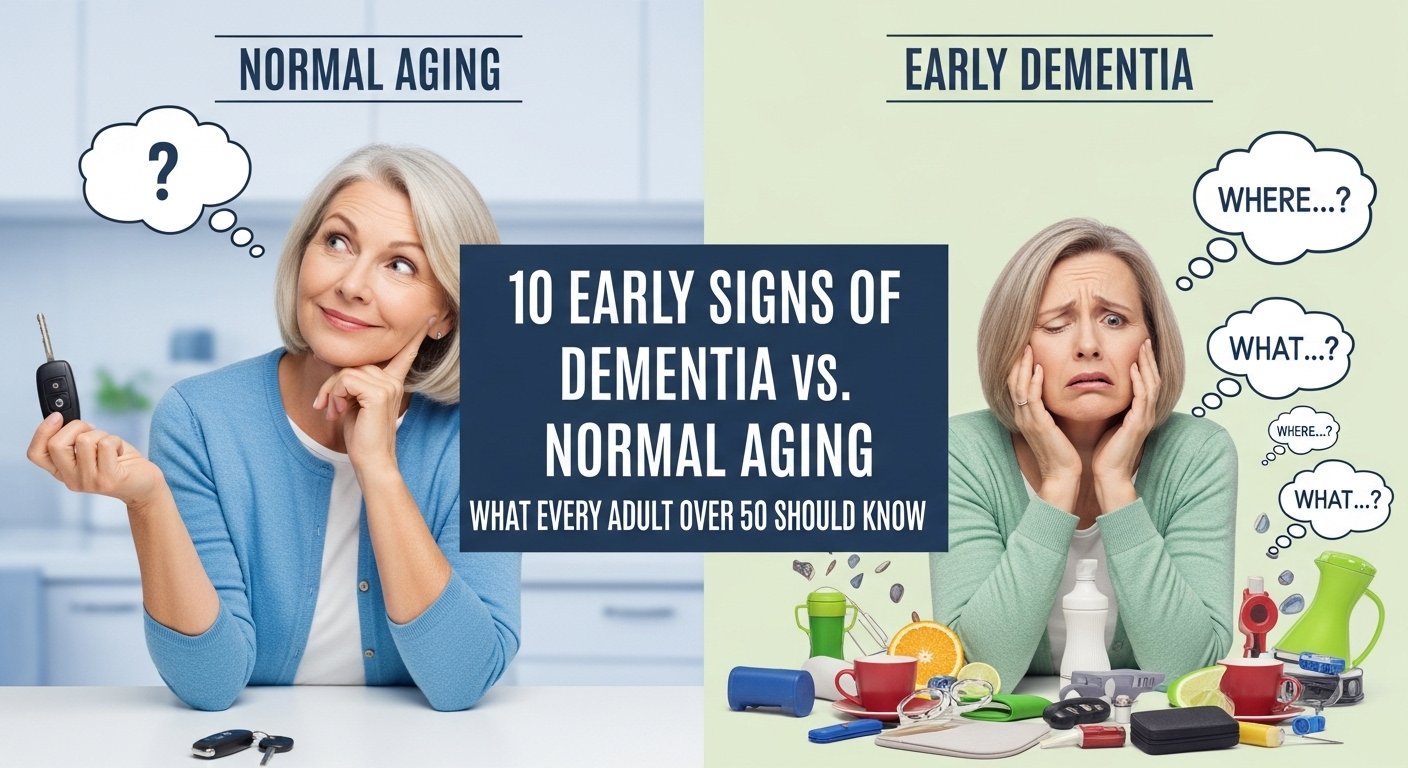
10 Early Signs of Dementia vs Normal Aging: What Every Adult Over 50 Should Know
Early signs of dementia vs normal aging are an important topic for adults over 50 who want to protect memory, independence, and long-term brain health. Many people notice occasional forgetfulness as they age, but knowing the difference between normal aging memory changes and warning signs of dementia can help families act early.
Recognizing 10 early signs of dementia may lead to faster diagnosis, better treatment options, and improved quality of life.
It is normal to forget a name sometimes or misplace keys now and then. However, frequent confusion, repeating questions, trouble handling finances, mood changes, or getting lost in familiar places may be more serious concerns. These symptoms should never be ignored, especially when they begin to affect everyday life.
In this guide, we’ll explore the most common signs adults over 50 should watch for, how they differ from typical aging, and what steps can support better brain health moving forward.
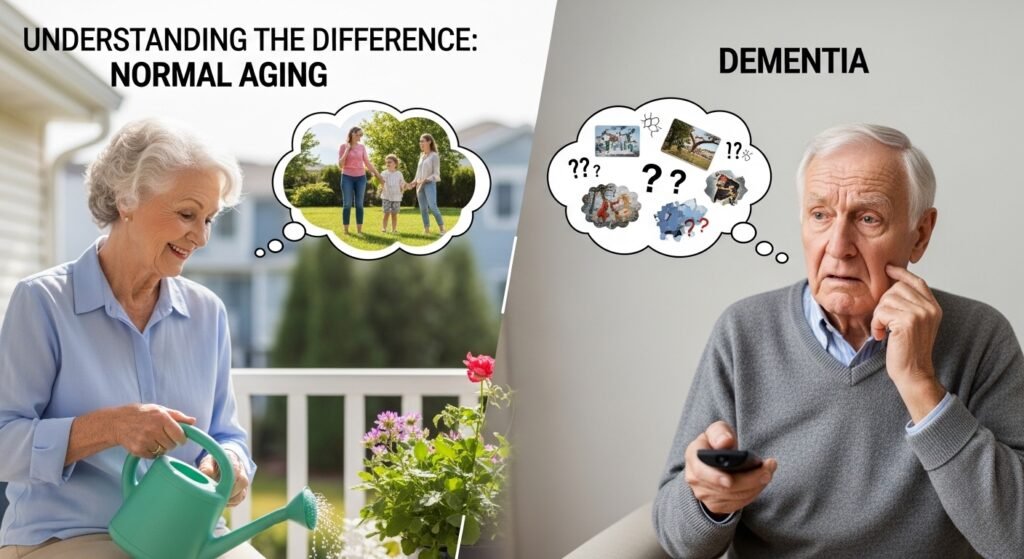
Understanding the Difference: Dementia vs Normal Aging
Before we dive into the signs, let’s get one thing clear.
**Normal aging** may include:
* Occasional forgetfulness
* Slower thinking
* Needing reminders
These changes are mild and don’t interfere with daily life.
**Dementia**, on the other hand, involves a deeper decline in memory and thinking skills that can affect daily routines, independence, and behavior.
👉 The key difference?
Normal aging = inconvenience
Dementia = disruption of daily life
1. Memory Loss That Disrupts Daily Life
Everyone forgets things sometimes. That’s normal.
But a possible warning sign is:
* Forgetting important dates regularly
* Asking the same questions over and over
* Relying heavily on notes for simple tasks
👉 Example: Forgetting a meeting occasionally is normal. Forgetting it every week is not.
2. Difficulty Completing Familiar Tasks
Daily routines should feel… well, familiar.
Watch for:
* Trouble cooking a known recipe
* Difficulty managing finances
* Getting confused while driving a regular route
👉 Normal aging: Taking longer to complete a task
👉 Dementia sign: Not knowing how to do it at all
👉Support memory and focus with top-rated brain health supplements designed for adults over 50. Explore the best options today! >>>>> Click Here
3. Confusion with Time or Place
Losing track of time happens. But confusion that doesn’t resolve is different.
Warning signs include:
* Forgetting where you are
* Not knowing how you got somewhere
* Losing track of dates or seasons
This goes beyond simple distraction.
4. Trouble Following Conversations
We all lose focus sometimes. But consistent issues may signal something more.
Look for:
* Difficulty following conversations
* Stopping mid-sentence
* Repeating the same story
👉 It’s not just forgetting—it’s struggling to process.
5. Problems with Words and Language
Words can slip away occasionally. That’s normal.
But concerns arise when:
* You can’t name common objects
* You pause frequently to find words
* Conversations become hard to follow
👉 Example: Calling a “watch” a “hand clock” regularly.
6. Misplacing Items and Losing the Ability to Retrace Steps
We all misplace things.
But a warning sign is:
* Putting items in unusual places (like keys in the fridge)
* Being unable to retrace steps
* Accusing others of stealing
This shift in behavior matters.
👉Help loved ones stay organized with smart reminder clocks, pill organizers, and daily memory aids. See top products now! >>>>> Click Here
7. Poor Judgment or Decision-Making
Judgment can change slightly with age—but not dramatically.
Watch for:
* Making risky financial decisions
* Ignoring personal hygiene
* Falling for scams easily
👉 This can impact safety and independence.
8. Withdrawal from Social Activities
Many people become more selective socially as they age.
But signs to watch:
* Avoiding hobbies once enjoyed
* Withdrawing from family or friends
* Losing interest in social interaction
👉 Social withdrawal can affect emotional well-being.
9. Changes in Mood or Personality
Mood shifts happen—but sudden or extreme changes are different.
Possible signs:
* Increased confusion or anxiety
* Irritability or suspicion
* Depression-like symptoms
👉 Personality changes are often overlooked—but important.
10. Loss of Initiative and Motivation
Everyone has low-energy days.
But watch for:
* Lack of motivation
* Sitting for long periods without engagement
* Needing prompting to start tasks
👉 This may reflect bigger cognitive changes.
👉 Improve brain wellness naturally with trusted omega-3, vitamins, and cognitive support formulas. Shop recommended picks here! >>>>> Click Here
Quick Comparison: Normal Aging vs Dementia
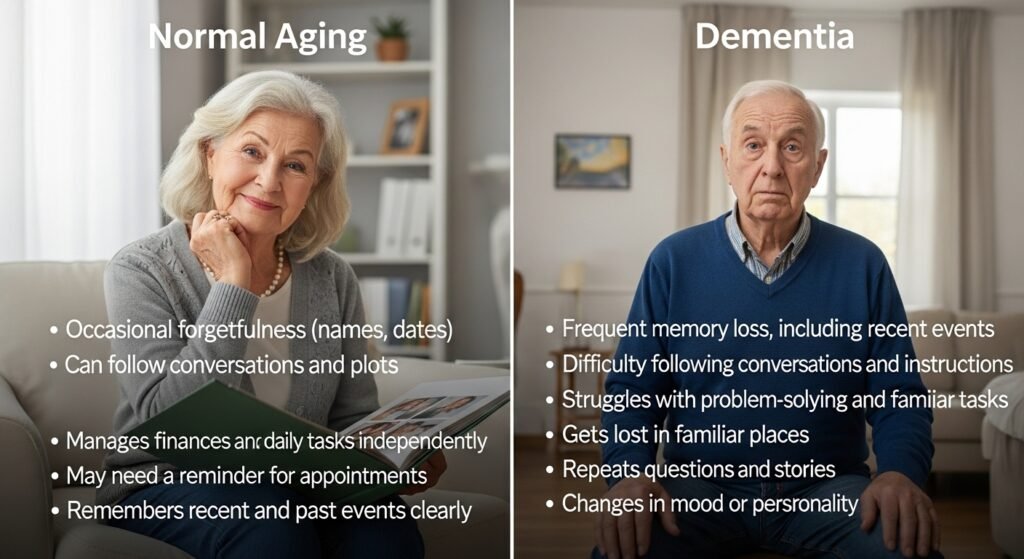
Normal Aging
* Occasional forgetfulness
* Slower thinking
* Minor mistakes
* Independent daily life
Possible Dementia
* Frequent memory loss
* Confusion and disorientation
* Trouble with daily tasks
* Behavior and personality changes
Lifestyle Tips to Support Brain Health After 50
No matter where you are, it’s never too early—or too late—to support your brain.
Simple Daily Habits
* Stay physically active (walking, stretching)
* Eat a balanced, brain-friendly diet
* Stay socially connected
* Challenge your mind regularly
* Get enough sleep
👉 These habits can help maintain mental clarity and overall well-being.
👉 Take control of your mental future—start supporting your brain today with a simple, effective solution.>>>>> Click Here
Real-Life Insight: Small Changes Matter
A man in his late 50s noticed he was becoming more forgetful. Instead of ignoring it, he made small changes:
* Started walking daily
* Joined a weekly discussion group
* Reduced stress and improved sleep
Within months, he felt more focused and mentally clear.
👉 The lesson? Consistency beats perfection.
Practical Daily Routine for Mental Sharpness
Try this simple structure:
* Morning: Light exercise + healthy breakfast
* Afternoon: Mental activity (reading, puzzles)
* Evening: Social time or relaxation
Even small routines can make a big difference.
Internal Linking :
* [Normal Aging or Dementia]
* [Aging Well]
* [Mental Longevity]
External Reference:
* National Institute on Aging
* Alzheimer’s research organizations
* Brain health and nutrition studies
👉 Looking for better focus and mental energy? Check out this daily support option for cognitive wellness.>>>>> Click Here
FAQs:10 Early Signs of Dementia vs Normal Aging
1. Is memory loss normal after 50?
Yes, mild forgetfulness is common. But frequent or worsening memory loss should be checked.
2. What are the earliest signs of dementia?
Memory loss, confusion, and difficulty with daily tasks are early indicators.
3. Can dementia be prevented?
There’s no guaranteed prevention, but lifestyle habits can reduce risk.
4. When should I be concerned about memory changes?
If they interfere with daily life or become frequent, it’s time to seek guidance.
5. How can I keep my brain sharp as I age?
Stay active, eat well, stay social, and challenge your mind.
6. Is forgetting names normal?
Yes, occasionally. But forgetting close family members regularly is not.
Conclusion:
Understanding the difference between early dementia symptoms and normal aging can make a major difference for individuals and families.
Mild forgetfulness may be common, but persistent memory loss, confusion, personality changes, and trouble with daily tasks deserve medical attention.
The earlier these signs are recognized, the sooner support and treatment can begin. Staying informed is one of the best ways to protect brain health after 50.
Protect long-term brain health with premium wellness products made to support memory and mental clarity. Check our favorites now! >>>>> Click Here
Disclaimer
This content is for educational purposes only and is not medical advice.
Discover more insights on mindful living, mental clarity, and holistic wellness by visiting mindbodyshifts.com.
Explore our latest articles and practical ideas designed to help you create meaningful mind–body balance in everyday life.