
Stress Management Through Emotional Regulation:How the Brain Learns to Stay Calm Under Pressure


Stress Management Through Emotional Regulation: How the Brain Learns to Stay Calm Under Pressure
Introduction
Stress is not only a reaction to external events—it is a physiological and emotional process shaped by how the brain interprets pressure. While stress itself is a normal survival response, chronic stress becomes harmful when emotional regulation systems are overwhelmed.
Scientific research shows that effective stress management depends largely on emotional regulation—the brain’s ability to process challenges without triggering prolonged stress responses. Learning how emotions influence stress is a powerful step toward long-term mental stability and resilience.
The Science of Emotional Regulation and Stress
Emotional regulation refers to the brain’s capacity to recognize, process, and respond to emotional stimuli appropriately. This process is primarily governed by communication between:
-
The prefrontal cortex (decision-making and control)
-
The amygdala (threat detection and emotional response)
-
The autonomic nervous system (stress activation and recovery)
When emotional regulation is strong, the stress response activates briefly and then shuts down. When regulation is impaired, stress remains active longer than necessary.
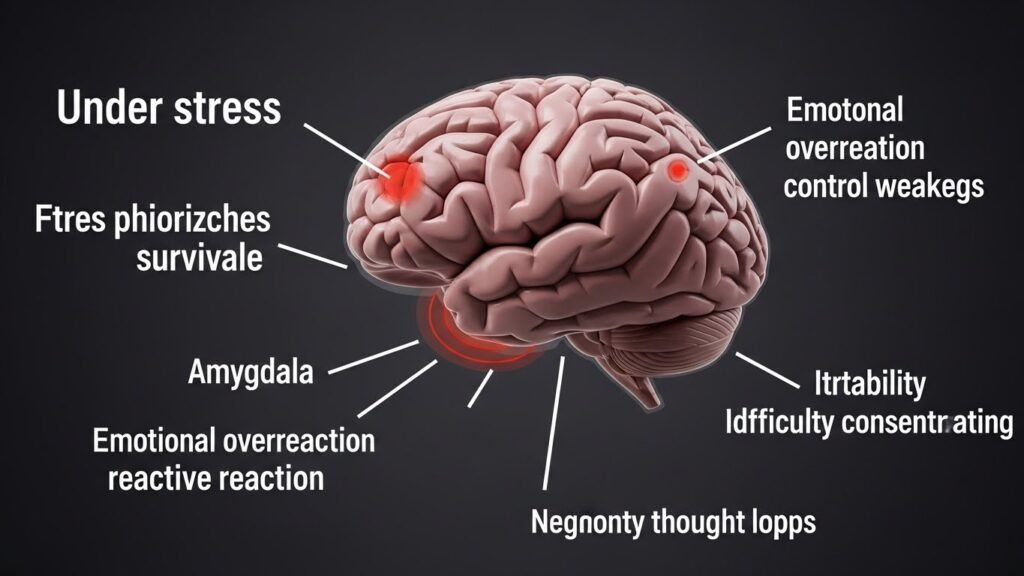
Under stress, the brain prioritizes survival. The amygdala becomes more reactive, while prefrontal control weakens. This explains why stress often leads to:
-
Emotional overreaction
-
Irritability
-
Difficulty concentrating
-
Negative thought loops
Without proper stress management, these patterns become habitual, reinforcing chronic stress.
The Nervous System’s Role in Stress Management
The autonomic nervous system consists of two main branches:
-
Sympathetic nervous system (fight-or-flight)
-
Parasympathetic nervous system (rest-and-recover)
Chronic stress keeps the body in sympathetic dominance. Emotional regulation techniques help activate parasympathetic pathways, allowing the nervous system to return to balance.
This balance is essential for effective stress management.
Support your nervous system naturally with tools designed to promote emotional regulation and long-term stress balance >>>>> Click Here
Why Emotional Awareness Reduces Stress
Research shows that simply identifying and naming emotions reduces amygdala activity. This process—often called affect labeling—creates distance between emotion and reaction.
Benefits include:
-
Reduced stress intensity
-
Improved emotional clarity
-
Faster recovery from stress triggers
Emotional awareness is not suppression—it is controlled processing.

Cognitive Reframing and Stress Control
Cognitive reframing involves changing how a situation is interpreted. Stress intensity often depends more on perception than on the event itself.
Scientific studies confirm that reframing:
-
Lowers cortisol release
-
Improves emotional flexibility
-
Strengthens prefrontal control
This makes cognitive reframing a cornerstone of evidence-based stress management.
Breathing and Emotional Regulation
Breathing patterns directly influence emotional states. Slow, controlled breathing stimulates the vagus nerve, which signals safety to the brain.
Effective breathing techniques:
-
Reduce heart rate
-
Lower cortisol
-
Improve emotional stability
This physiological pathway explains why breathing exercises are among the most reliable stress management tools.

Strengthen your brain’s ability to stay calm under pressure by using science-backed stress-support solutions that work at the nervous-system level.>>>>> Click Here
Stress, Memory, and Emotional Reactivity
Chronic stress strengthens emotional memory associated with negative experiences. This makes future stress responses faster and more intense.
Emotional regulation training helps:
-
Weaken stress-related memory loops
-
Reduce anticipatory anxiety
-
Restore emotional flexibility
Over time, the brain relearns safety rather than threat.
Lifestyle Factors That Support Emotional Stress Management
Several daily habits enhance emotional regulation capacity:
-
Consistent sleep patterns
-
Regular physical movement
-
Reduced stimulant overuse
-
Structured daily routines
These factors stabilize brain chemistry and improve stress resilience.
When Emotional Stress Becomes Overwhelming
If emotional stress leads to persistent anxiety, mood disruption, or functional impairment, professional support is essential. Therapy and guided interventions strengthen emotional regulation skills safely and effectively.
Seeking help is a proactive stress management strategy—not a failure.

Take the next step toward better emotional control and mental resilience with carefully selected stress-management resources >>>>> Click Here
* [Guide to stress management and brain health]
* [How sleep affects mental clarity]
* [Nutrition habits for long-term wellness]
Frequently Asked Questions (FAQ)
❓ FAQ 1: What is emotional regulation in stress management?
Emotional regulation is the brain’s ability to manage emotional responses so stress does not remain activated longer than necessary.
❓ FAQ 2: Can emotional regulation reduce physical stress symptoms?
Yes. Improved emotional regulation lowers cortisol and nervous system activation, reducing physical stress symptoms.
❓ FAQ 3: Is stress always harmful?
No. Short-term stress is adaptive. Chronic, unregulated stress is what becomes harmful.
❓ FAQ 4: Can emotional regulation be trained?
Yes. The brain is plastic, and emotional regulation skills improve with consistent practice.
❓ FAQ 5: How long does it take to improve stress regulation?
Many people notice improvement within weeks, while long-term resilience develops over months.
Conclusion
Stress management is not about eliminating stress but learning how the brain processes emotional challenges. Emotional regulation strengthens the connection between awareness, control, and recovery, allowing stress to pass rather than accumulate.
By understanding the neuroscience of emotional regulation and supporting the nervous system, individuals can build lasting resilience and mental clarity—even under pressure.