
How to Improve Sleep Quality Naturally:Learn how sleep cycles, hormones, and the nervous system affect deep

Improve Sleep Quality Naturally: Learn how sleep cycles, hormones, and the nervous system affect deep
Want to improve sleep quality naturally, fall asleep faster, and wake up feeling fully refreshed? Understanding sleep cycles, sleep hormones like melatonin, and the nervous system is the key to achieving deep, restorative sleep and better overall health. If you’ve been searching for ways to sleep better at night naturally or fix poor sleep without medication, it starts with how your body regulates sleep from within.
Many people struggle with poor sleep quality, frequent waking, or low energy, even after spending enough hours in bed. This often happens when the body’s natural sleep cycles are disrupted, hormones are out of balance, or the nervous system remains overstimulated. As a result, you may miss out on deep sleep stages, which are essential for recovery, brain function, hormone balance, and energy restoration.
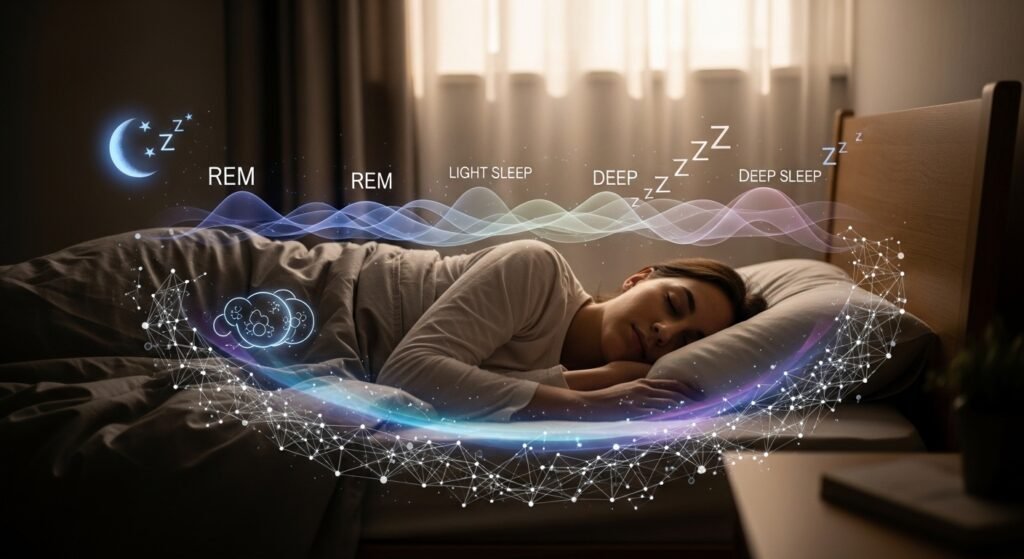
In this guide, you’ll learn how to increase deep sleep naturally, support your body’s circadian rhythm, and improve sleep quality through simple daily habits. By optimizing your sleep environment, calming your nervous system, and supporting natural hormone balance, you can transform your nights—and your days—without relying on quick fixes.
Why Sleep Quality Matters More Than Sleep Duration
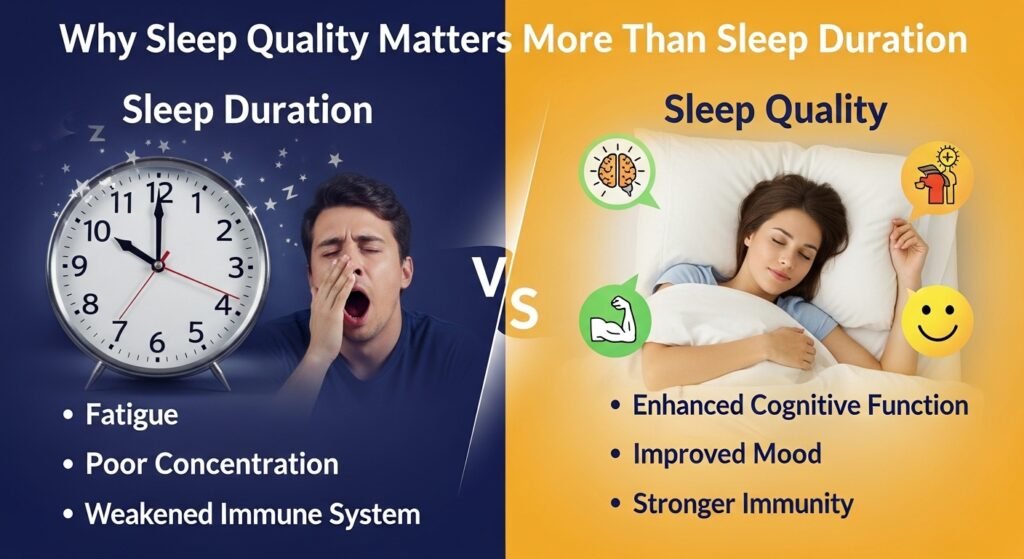
Many people believe that sleeping longer automatically means better rest. In reality, sleep quality matters far more than sleep duration. If your sleep lacks deep, restorative stages, even eight or nine hours may leave you feeling exhausted.
High-quality sleep allows the brain and body to fully cycle through deep sleep and REM sleep, which are essential for physical repair, memory consolidation, emotional balance, and metabolic health.
Poor sleep quality is associated with:
-
Chronic fatigue
-
Weight gain and insulin resistance
-
Anxiety and low mood
-
Weakened immune function
Ready to Improve Sleep Quality Naturally and sleep more deeply tonight?
👉 Explore our science-backed sleep guides and recommended tools to improve sleep quality naturally. >>>>> Click Here
How Sleep Quality Works (Science Explained)
Sleep Cycles and Sleep Architecture

Sleep occurs in repeating cycles of about 90 minutes. Each cycle includes:
-
Light sleep (N1–N2)
-
Deep sleep (N3)
-
REM sleep
Healthy sleep depends on uninterrupted cycles. Stress, late-night light exposure, and nervous system activation fragment these cycles and reduce deep sleep.
Deep Sleep vs REM Sleep
-
Deep Sleep: Physical repair, immune strengthening, growth hormone release
-
REM Sleep: Memory processing, emotional regulation, brain detoxification
Modern lifestyles significantly reduce deep sleep, even in people who sleep long hours.
Key Hormones That Affect Sleep Quality
Cortisol and Nighttime Alertness
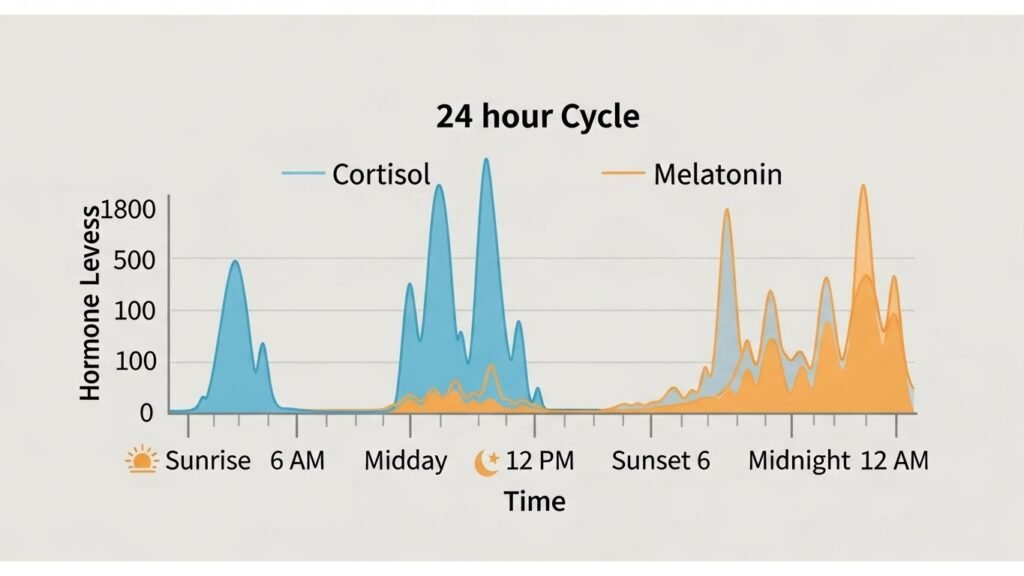
Cortisol should be low at night. Chronic stress, intense evening activity, and unstable blood sugar can elevate cortisol after sunset, preventing deep sleep.
Stress-support supplements or adaptogenic blends
Melatonin and Circadian Rhythm
Melatonin signals the body that it is time to sleep. Artificial light at night—especially blue light—suppresses melatonin and delays sleep onset.
The Nervous System’s Role in Sleep

Sleep requires a parasympathetic (rest-and-digest) state. When the nervous system is stuck in fight-or-flight mode, the brain remains alert during sleep.
Activating the vagus nerve before bed dramatically improves sleep depth and continuity.
Breathing tools, meditation apps, vagus nerve devices
Take control of your sleep—naturally
Learn proven techniques to calm your nervous system and wake up refreshed every morning.>>>>> Click Here
Proven Ways to Improve Sleep Quality Naturally
Optimize Evening Light Exposure
-
Use warm lighting after sunset
-
Avoid screens 60–90 minutes before bed
Use Magnesium to Support Deep Sleep
Magnesium supports GABA activity and nervous system relaxation. Research favors magnesium glycinate and magnesium threonate for sleep.

Regulate Bedroom Temperature
Optimal sleep temperature: 18–20°C (65–68°F). Cooler environments increase deep sleep duration.
Breathing Techniques That Calm the Brain
Slow nasal breathing lowers heart rate and cortisol:
-
Inhale 4 seconds
-
Exhale 6–8 seconds
-
5 minutes before bed
Prevent Nighttime Blood Sugar Drops
Blood sugar crashes trigger cortisol release. A small protein-based snack in the evening may improve sleep stability.
Common Sleep Mistakes That Reduce Sleep Quality
-
Alcohol before bed
-
Late-night workouts
-
Excessive melatonin use
-
Inconsistent sleep schedules
-
Using the phone in bed
Start improving your sleep naturally today
Discover simple, science-backed habits you can apply tonight for deeper, more restorative sleep. >>>>> Click Here
How Long Does It Take to Improve Sleep Quality Naturally?
-
7–14 days: noticeable improvement
-
3–6 weeks: increased deep sleep
-
6–8 weeks: circadian rhythm reset
Consistency is key.
Related Articles:
* [Guide to stress management and brain health]
* [How sleep affects mental clarity]
* [Nutrition habits for long-term wellness]
❓ Frequently Asked Questions about How to Improve Sleep Quality Naturally (FAQs – Schema )
Can sleep quality be improved naturally?
Yes. Lifestyle changes alone can significantly improve sleep quality.
What improves deep sleep the fastest?
Lowering nighttime cortisol and reducing evening light exposure.
Is melatonin safe long-term?
Occasional use is safe, but chronic use is not recommended.
Why do I wake up tired every morning?
Poor sleep architecture and insufficient deep sleep are common causes.
Does magnesium really improve sleep quality?
Yes, especially magnesium glycinate and threonate.
Conclusion: How to Improve Sleep Quality Naturally
Disclaimer:
This content is for educational purposes only and is not medical advice.
Discover more insights on mindful living, mental clarity, and holistic wellness by visiting mindbodyshifts.com.
Explore our latest articles and practical ideas designed to help you create meaningful mind–body balance in everyday life.
4 thoughts on “How to Improve Sleep Quality Naturally:Learn how sleep cycles, hormones, and the nervous system affect deep”