
Mental Fatigue vs Physical Fatigue Explained: Understanding the Difference and How to Recover Naturally

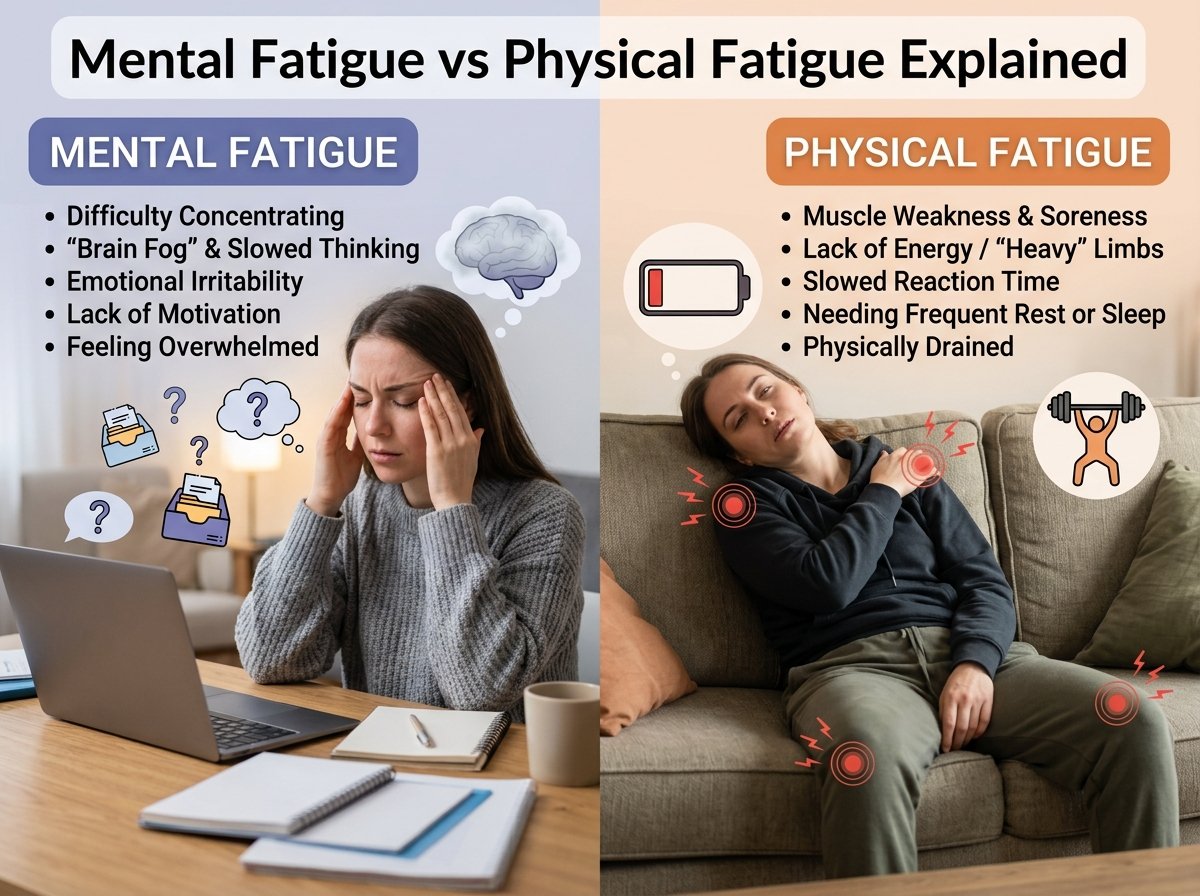
Mental Fatigue vs Physical Fatigue Explained
Feeling tired does not always mean the same thing. Some days the body feels heavy after physical activity, while other days the mind feels exhausted even without much movement.
Understanding the difference between mental fatigue and physical fatigue may help people recover more effectively and improve their overall wellness.
Modern life places constant demands on both the brain and body. Long work hours, digital overload, stress, poor sleep, emotional pressure, and busy schedules can create exhaustion that feels difficult to explain.
Many people experience low motivation, brain fog, and reduced productivity without realizing whether the problem is mental fatigue, physical fatigue, or both.
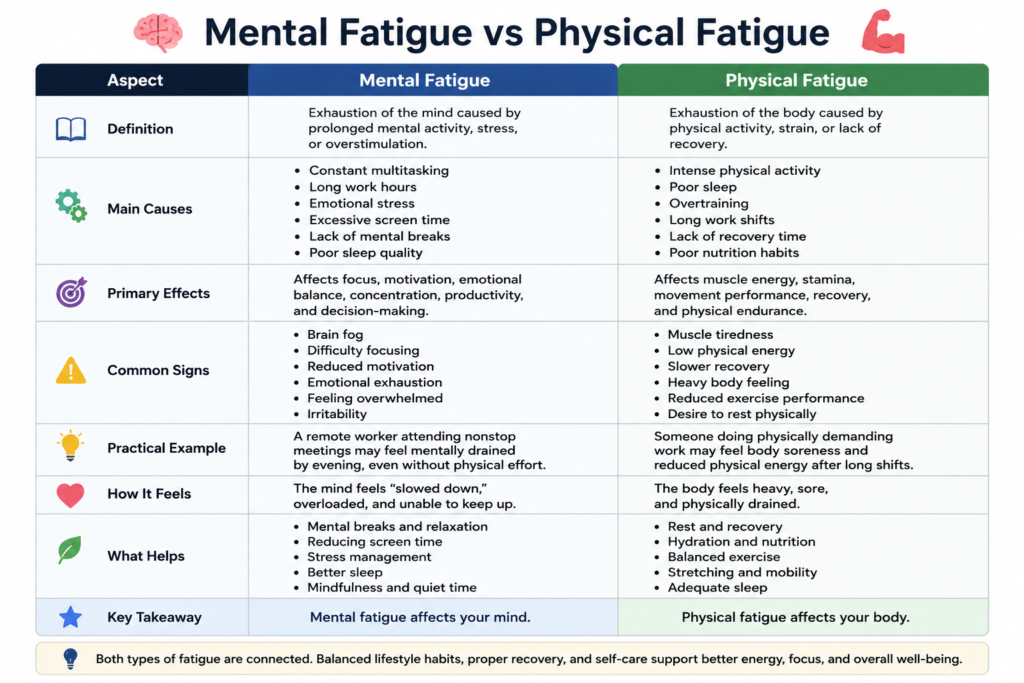
The body and mind are deeply connected, but they respond to stress and recovery in different ways.
Mental fatigue often develops from prolonged focus, emotional stress, multitasking, or constant stimulation. Physical fatigue usually happens after physical effort, poor recovery, lack of sleep, or limited movement.
The good news is that healthy lifestyle habits may help improve both types of fatigue naturally. Better sleep, movement, stress management, recovery routines, and balanced wellness habits often support long-term energy and resilience.
This guide explains mental fatigue vs physical fatigue while sharing practical ways to improve focus, recovery, and daily performance naturally.
Understanding Mental Fatigue vs Physical Fatigue
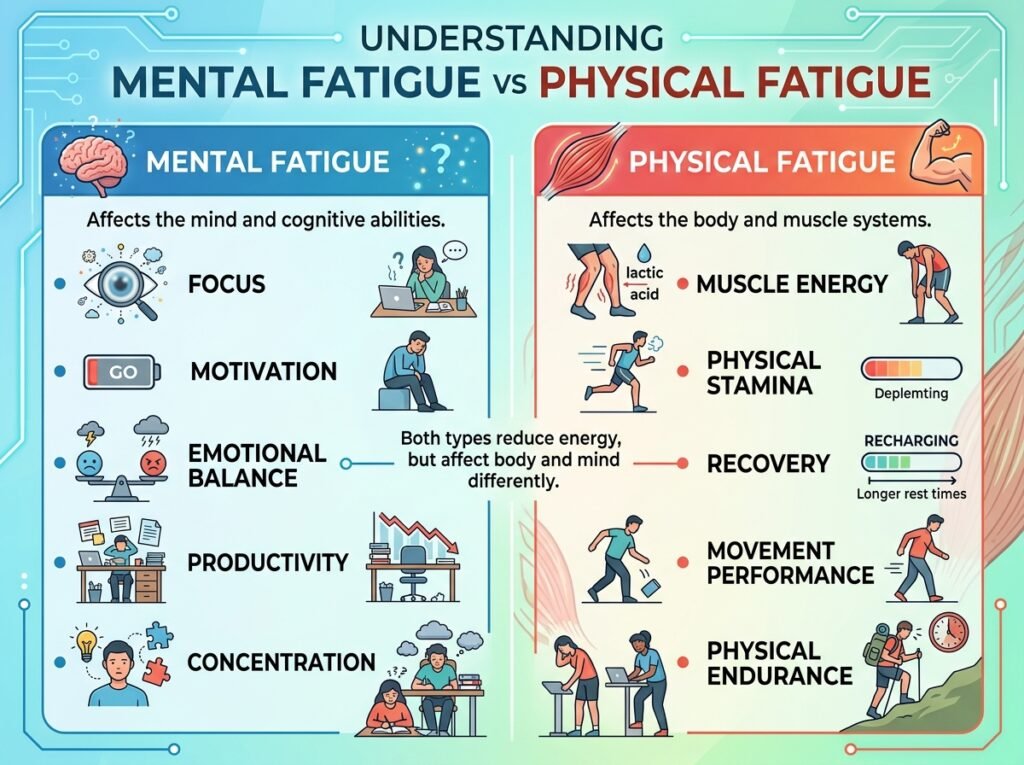
Although both types of fatigue reduce energy, they affect the body and mind differently.
Mental fatigue mainly affects:
* Focus
* Motivation
* Emotional balance
* Productivity
* Concentration
Physical fatigue mainly affects:
* Muscle energy
* Physical stamina
* Recovery
* Movement performance
* Physical endurance
Many people experience both at the same time, especially during stressful periods.
#Practical example:
Someone sitting at a computer all day may feel mentally exhausted despite not being physically active.
What Is Mental Fatigue?
Mental fatigue happens when the brain remains overloaded for long periods without enough recovery.
This type of exhaustion often develops from:
* Constant multitasking
* Long work hours
* Emotional stress
* Excessive screen time
* Lack of mental breaks
* Poor sleep quality
Mental fatigue may feel like the brain is “slowing down.”
Common Signs of Mental Fatigue
Signs may include:
* Brain fog
* Difficulty focusing
* Reduced motivation
* Emotional exhaustion
* Feeling overwhelmed
* Poor concentration
* Irritability
* Reduced productivity
#Practical example:
A remote worker attending nonstop meetings may feel mentally drained by the evening even without physical effort.
What Is Physical Fatigue?
Physical fatigue usually happens when the body needs rest and recovery.
It may develop from:
* Intense physical activity
* Poor sleep
* Overtraining
* Long work shifts
* Lack of recovery time
* Poor nutrition habits
Physical fatigue often affects movement and stamina more than concentration.
Common Signs of Physical Fatigue
Signs may include:
* Muscle tiredness
* Low physical energy
* Slower recovery
* Heavy body feeling
* Reduced exercise performance
* Desire to rest physically
#Practical example:
Someone doing physically demanding work may feel body soreness and reduced physical energy after long shifts.
Why Mental Fatigue Can Feel Worse Than Physical Fatigue

Mental exhaustion is sometimes harder to recognize because the body may still appear functional.
A person can continue working, answering messages, and completing tasks while mentally overwhelmed.
Mental fatigue often affects:
* Decision-making
* Creativity
* Patience
* Motivation
* Emotional resilience
Unlike physical tiredness, mental fatigue may not improve simply by sitting down.
The brain often needs true mental recovery.
⚡ Struggling with brain fog, low motivation, or constant tiredness? Explore trusted supplements that may help support mental clarity, stamina, and healthy recovery routines for a more productive day.>>>>> Click Here
How Poor Sleep Affects Both Types of Fatigue
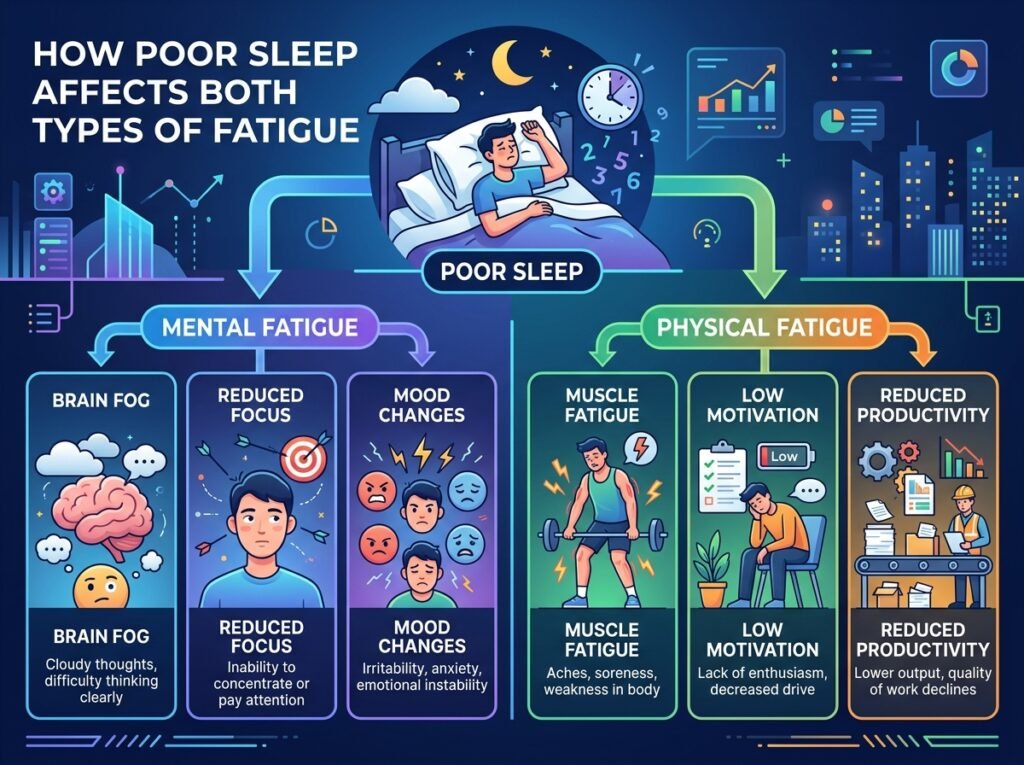
Sleep strongly influences mental and physical recovery.
Poor sleep may contribute to:
* Brain fog
* Reduced focus
* Mood changes
* Muscle fatigue
* Low motivation
* Reduced productivity
Many people underestimate how strongly sleep affects emotional balance and daily performance.
Signs Sleep May Be Affecting Your Energy
Common signs include:
* Waking up tired
* Afternoon crashes
* Heavy caffeine dependence
* Difficulty concentrating
* Physical sluggishness
#Practical example:
Someone sleeping only a few hours nightly may feel both mentally overwhelmed and physically drained during the day.
Stress and Emotional Overload Increase Mental Fatigue
Stress is one of the biggest causes of mental exhaustion.
Modern stress often comes from:
* Constant notifications
* Work pressure
* Financial concerns
* Emotional responsibilities
* Social media overload
Even without physical activity, the brain may stay mentally active all day.
This constant stimulation reduces recovery quality over time.
Customer Reviews and Real-Life Experiences
Customer Reviews
People who improve recovery habits often report:
* Better concentration
* More balanced energy
* Improved emotional resilience
* Reduced brain fog
* Better sleep quality
* Improved productivity
Examples include:
* An office worker is improving focus after reducing screen time at night.
* A parent reducing mental exhaustion through better sleep and movement routines.
* A fitness-focused adult improving recovery by balancing workouts with rest days.
Most improvements happen gradually through consistent lifestyle adjustments.
Lifestyle Habits That Help Reduce Mental Fatigue
Take Mental Breaks During the Day
The brain needs recovery periods to maintain focus.
Helpful ideas include:
* Walking outside
* Short stretching breaks
* Time away from screens
* Quiet moments without notifications
Reduce Digital Overload
Constant phone use may lead to increased mental exhaustion.
Helpful habits include:
* Turning off unnecessary notifications
* Taking social media breaks
* Creating screen-free evening routines
Improve Sleep Quality
Better sleep supports emotional balance and mental recovery.
Helpful habits include:
* Consistent bedtime routines
* Limiting caffeine late in the day
* Keeping the bedroom cool and dark
Lifestyle Habits That Help Reduce Physical Fatigue
Prioritize Recovery
Physical recovery is essential after exercise or demanding work.
Helpful recovery habits include:
* Rest days
* Stretching
* Hydration
* Balanced nutrition
* Sleep consistency
Stay Active Without Overdoing It
Both too little movement and excessive physical strain may increase fatigue.
Balanced activity is often more sustainable.
Support Nutrition and Hydration
Balanced meals and proper hydration support energy and recovery.
Helpful habits include:
* Drinking enough water
* Eating protein-rich meals
* Including healthy fats and whole foods
Natural Wellness Supplements Often Used for Recovery and Energy
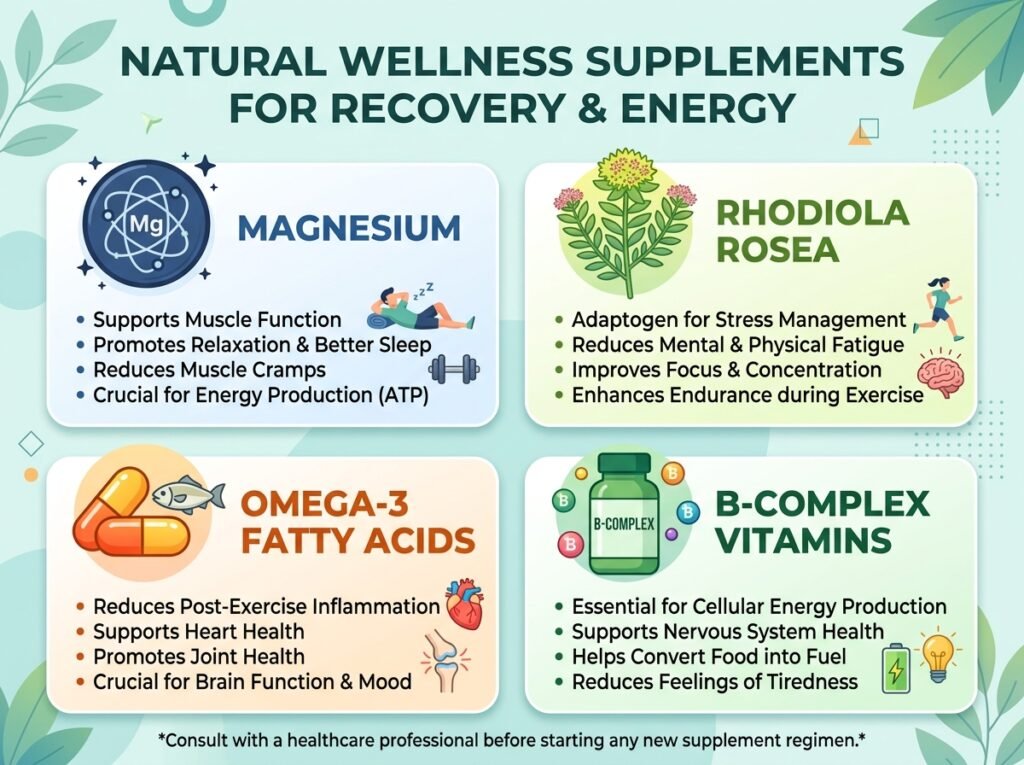
Some people also explore supplements as part of balanced wellness routines.
Supplements work best alongside healthy habits.
Magnesium
Often used for:
* Relaxation support
* Recovery routines
* Sleep quality support
Rhodiola Rosea
Popular for:
* Mental stamina
* Productivity support
* Stress resilience
Omega-3 Fatty Acids
Often associated with:
* Brain wellness
* Mental clarity
* Healthy aging support
B-Complex Vitamins
Frequently used to support:
* Daily energy metabolism
* Mental performance
* Active lifestyles
🔥 Don’t let mental fatigue or physical exhaustion slow you down. Support your recovery, motivation, and daily vitality with wellness supplements made for modern lifestyles and busy schedules.>>>>> Click Here
Internal Linking Suggestions
You may internally link this article to:
* [The Connection Between Energy Flow and High Productivity]
* [How Blue Light Affects Sleep Naturally]
* [Deep Sleep Optimization]
* [Advanced Stress Management Strategies]
* [Morning and Evening Routine]
External Reference Suggestions
For additional credibility and learning, reference trusted sources such as:
* Wellness and healthy aging organizations
* Sleep health resources
* Mental wellness publications
* Productivity and recovery experts
* Public health organizations
FAQs: Mental Fatigue vs Physical Fatigue
What is the difference between mental fatigue and physical fatigue?
Mental fatigue primarily affects focus and emotional energy, whereas physical fatigue primarily affects muscle energy and physical stamina.
Can stress cause mental fatigue?
Yes. Chronic stress and constant mental stimulation may contribute to emotional exhaustion and reduced concentration.
Why does poor sleep affect both body and mind?
Sleep supports both physical recovery and mental resilience, making it essential for overall wellness.
Can exercise help with mental fatigue?
Regular movement may help support mood balance, mental clarity, and stress management.
How can I recover from mental exhaustion naturally?
Better sleep, reduced screen time, stress management, movement, and recovery routines may help support mental recovery.
Does hydration affect fatigue levels?
Yes. Poor hydration may contribute to low energy, reduced focus, and physical tiredness.
Are supplements enough to improve energy?
Supplements may support wellness, but healthy lifestyle habits remain the foundation of long-term recovery and energy.
When Should You See a Doctor for Fatigue?
Occasional tiredness is a normal part of life, especially after busy days, physical activity, or short periods of stress. However, persistent mental fatigue or physical exhaustion that does not improve with rest may indicate an underlying health issue that requires professional evaluation.
Consider speaking with a healthcare professional if you experience:
* **Fatigue that lasts for several weeks** despite adequate sleep and recovery
* **Severe brain fog or memory problems** that interfere with daily activities
* **Extreme physical weakness** or difficulty performing routine tasks
* **Unexplained weight loss** or significant changes in appetite
* **Shortness of breath, chest pain, or dizziness** along with fatigue
* **Persistent sleep problems** that leave you feeling exhausted every day
* **Symptoms of anxiety, depression, or emotional distress** that affect your quality of life
While lifestyle changes can support energy and recovery, ongoing or worsening fatigue should not be ignored. Early medical evaluation can help identify potential causes and provide appropriate guidance for improving both physical and mental well-being.
Conclusion: Mental Fatigue vs Physical Fatigue
Mental fatigue and physical fatigue may feel similar, but they affect the body and mind in different ways. Understanding the difference may help people improve recovery, focus, and daily performance more effectively.
Mental exhaustion often develops from stress, overstimulation, poor sleep, and emotional overload, while physical fatigue is more closely connected to physical strain and recovery needs.
The good news is that small, consistent lifestyle habits may help support both mental and physical energy naturally. Better sleep, balanced movement, stress management, hydration, recovery, and healthier digital habits often create meaningful long-term improvements.
The body and mind recover best when both are supported together.
This content is for educational purposes only and is not medical advice.
Discover more insights on mindful living, mental clarity, and holistic wellness by visiting mindbodyshifts.com.
Explore our latest articles and practical ideas designed to help you create meaningful mind–body balance in everyday life.
One thought on “Mental Fatigue vs Physical Fatigue Explained: Understanding the Difference and How to Recover Naturally”