
Simple Ways to Protect Your Joints and Reduce Pain


Simple Ways to Protect Your Joints and Reduce Pain
Introduction: Your Joints Work Hard for You—Every Day

Your joints support nearly every movement you make, from getting out of bed to lifting groceries or taking a walk. Yet many people don’t think about joint health until joint pain or stiffness appears. The good news is that protecting your joints doesn’t require extreme measures or complicated routines.
With a few **simple, joint-friendly habits**, you can reduce strain, support strong joints, and keep your body moving smoothly for years to come. This guide explores practical, everyday ways to protect your joints, reduce discomfort, and support overall joint health—naturally and sustainably.
Why It’s Important to Protect Your Joints
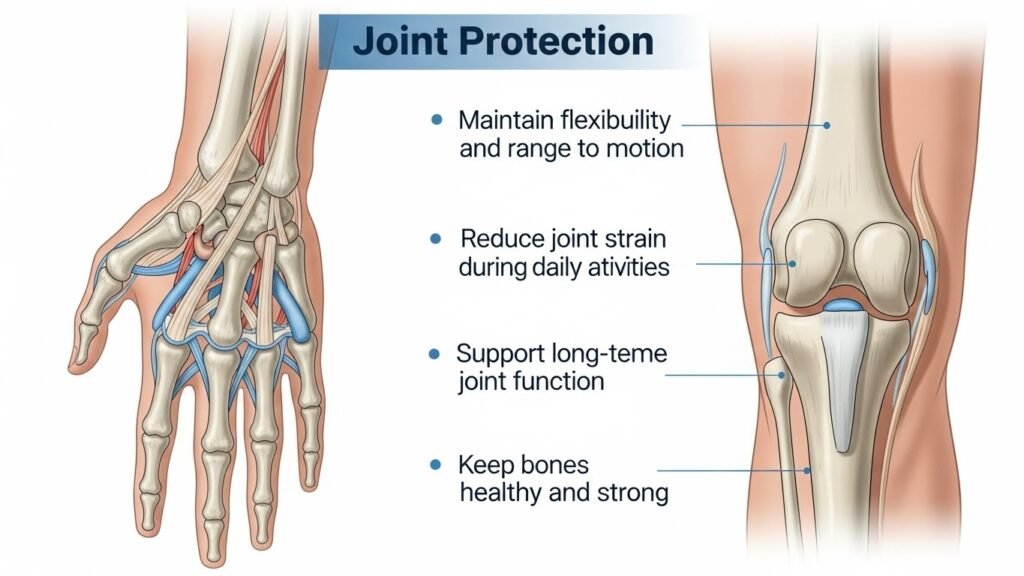
Joints connect your bones and allow movement. Over time, wear and tear, poor posture, inactivity, or extra stress on your joints can lead to stiffness and joint pain.
Protecting your joints helps:
* Maintain flexibility and range of motion
* Reduce joint strain during daily activities
* Support long-term joint function
* Keep bones healthy and strong
Healthy joints make it easier to stay active and enjoy life to the fullest.
Protect Your Joints by Staying Active
Why Movement Matters for Joint Health
Joints are made to move. Regular movement helps lubricate your joints, nourish cartilage, and keep muscles strong. When you stay active, your joints move more smoothly and feel less stiff.
Inactivity, on the other hand, can lead to increased stiffness and reduced joint function.
Choose Low-Impact Activities
Low-impact exercise is one of the best ways to protect your joints while staying active. These activities reduce pressure on your joints while still providing benefits.
Joint-friendly activities include:
* Walking at a comfortable pace
* Swimming or water exercises
* Cycling
* Yoga or gentle stretching
* Elliptical training
These exercises help keep your joints flexible without excessive wear and tear.
Support your joints and move with ease—start your daily joint care today.
Low-Impact Exercise: A Key to Reducing Joint Pain
Low-impact exercise supports joint health by strengthening muscles around the joints. Strong muscles help absorb shock and reduce strain on your joints.
Benefits of low-impact exercise:
* Improves range of motion
* Reduces stiffness
* Helps keep joints lubricated
* Supports bone health
Even short, consistent sessions can make a noticeable difference over time.
Maintain a Healthy Weight to Reduce Joint Stress

How Weight Affects Joint Pain
Extra weight puts additional pressure on your joints, especially the knees, hips, and lower back. Even a small amount of weight loss can significantly reduce joint strain.
Maintaining a healthy weight helps:
* Reduce pressure on your joints
* Improve joint function
* Lower the risk of joint problems
This is one of the most effective ways to protect your joints in the long term.
Simple Tips for Maintaining a Healthy Weight
* Focus on balanced meals
* Practice portion awareness
* Stay physically active
* Build sustainable eating habits
A healthy lifestyle supports both joint health and overall well-being.
Protect Your Joints During Daily Activities
Use Your Strongest Joints
Small joints, like those in your hands, are more prone to strain. Whenever possible, use larger joints and stronger muscles.
Examples:
* Carry bags close to your body
* Use both hands instead of one
* Push doors open with your shoulder or forearm
These small adjustments help protect your joints during daily activities.
Reduce Joint Strain at Home and Work
Simple changes can reduce stress on your joints:
* Sit with proper posture
* Avoid staying in one position too long
* Adjust your workspace for comfort
* Take short movement breaks
These habits help keep your joints comfortable throughout the day.
Protect your joints naturally and stay active—take the next step now.
Keep Moving to Prevent Stiff Joints
Stiffness often comes from staying still too long. Gentle movement keeps joints lubricated and flexible.
Easy ways to keep moving:
* Stretch lightly in the morning
* Take short walks during the day
* Change positions often
* Do simple range-of-motion exercises
Consistency matters more than intensity.
Support Joint Health with Healthy Habits
Eat to Support Joints and Bones
A healthy diet supports joint health by providing nutrients that help reduce inflammation and support bone health.
Joint-friendly foods include:
* Fatty fish with anti-inflammatory properties
* Leafy greens like romaine and bibb lettuces
* Nuts and seeds
* Colorful fruits and vegetables
Healthy eating helps support joints from the inside out.
Stay Hydrated
Hydration helps keep joints lubricated. Drinking enough water supports cartilage and overall joint function.
Make hydration part of your daily routine.
Build Strong Joints with Muscle Support
Muscles protect joints by absorbing shock. Weak muscles can increase strain on joints, leading to discomfort.
Ways to strengthen muscles safely:
* Bodyweight exercises
* Resistance bands
* Light strength training
* Physical therapy–inspired movements
Strong muscles and joints work together to support smooth movement.
Joint-Friendly Habits That Make a Big Difference
Pay Attention to Your Body
Ignoring joint pain can lead to bigger issues. Pay attention to early signs like stiffness or discomfort.
If pain persists, consider seeking guidance from a qualified professional for safe movement advice.
Maintain Flexibility and Range of Motion
Stretching helps joints move freely. Gentle stretching:
* Reduces stiffness
* Improves flexibility
* Supports joint function
Stretch regularly, especially after activity.
Reduce Joint Pain Through Daily Routine Adjustments
Your daily routine can either protect or strain your joints.
Joint-friendly routine tips:
* Warm up before the activity
* Use proper body mechanics
* Take breaks during repetitive tasks
* Avoid sudden, jerky movements
These simple habits reduce the risk of joint damage over time.
Give your joints the support they deserve—begin your journey today
Arthritis and Joint Care: A Gentle Approach

Many people experience joint pain related to arthritis. While this guide avoids medical treatment, lifestyle habits can support comfort and mobility.
Low-impact exercise, healthy eating, and daily movement can help manage stiffness and support joint health naturally.
Practical Examples: Protecting Joints in Everyday Life
* Lifting groceries close to your body reduces joint strain
* Choosing stairs slowly instead of rushing protects knees
* Using supportive footwear reduces pressure on joints
* Stretching before bed helps prevent morning stiffness
Small actions add up to long-term joint health.
Actionable Tips to Protect Your Joints Today
* Move your joints every day
* Choose low-impact exercise
* Maintain a healthy weight
* Eat joint-supportive foods
* Use good posture
* Avoid overloading small joints
Consistency is key to lasting results.
Related Articles:
[Active Lifestyle & Daily Energy]
[Nutrition Tips for Bone and Joint Support]
Frequently Asked Questions:
What are the best ways to protect your joints Daily?
Staying active, maintaining a healthy weight, and using joint-friendly movements help protect your joints.
Can low-impact exercise really reduce joint pain?
Yes, low-impact exercise helps strengthen muscles, improve flexibility, and reduce stiffness.
How does weight affect joint health?
Extra weight increases pressure on joints, especially knees and hips, increasing joint strain.
Are joints supposed to move every day?
Yes, joints are made to move. Regular movement helps keep them lubricated and flexible.
What foods support joint health?
Fatty fish, leafy greens, fruits, vegetables, and healthy fats support joint health.
When should I be concerned about joint pain?
If joint pain persists or limits movement, it’s wise to seek professional guidance.
Conclusion: Small Habits, Strong Joints
Protecting your joints doesn’t require perfection—just awareness and consistency. Simple, joint-friendly habits can reduce joint pain, improve mobility, and support long-term joint health.
By staying active, moving mindfully, and caring for your body each day, you can keep your joints strong and flexible for years to come. Start small, stay consistent, and let your joints support the life you love.
Disclaimer:
*This content is for educational purposes only and is not medical advice.*