
Boost Mental Health and Well-being: Emotional Wellness Tips


Boost Mental Health and Well-being: Emotional Wellness Tips
Introduction
Mental health and well-being are not about feeling happy all the time. They are about learning how to move through life’s ups and downs with balance, awareness, and care. Emotional wellness plays a major role in how we think, feel, and respond to daily challenges. When emotional well-being is supported, it becomes easier to cope with stress, develop healthy habits, and naturally improve your mental health.
In this article, you’ll find practical, realistic emotional wellness tips that support mental health and overall well-being. These ideas are designed for everyday life—simple actions that help you feel more grounded, resilient, and connected to yourself.
Understanding Mental Health, Wellness, and Well-being

Mental health, wellness, and well-being are closely connected, but they are not the same thing.
**Mental health** relates to thoughts, feelings, and emotional balance
**Wellness** is the daily care of the mind and body
**Well-being** reflects how satisfied, supported, and balanced you feel overall
Emotional wellness sits at the center of all three. It shapes how you respond to stress, manage anxiety, and maintain healthy relationships.
Why Emotional Wellness Matters
Emotional well-being helps you:
* Understand your thoughts and feelings
* Cope during difficult times
* Improve your mental well-being
* Support physical and emotional health
Without emotional care, stress can build quietly and impact both mental and physical health.
Emotional Wellness and Mental Health: The Core Connection
Emotional wellness supports your ability to manage stress, adapt to change, and stay present. It does not mean ignoring negative emotions. Instead, it means learning how to respond to them in healthier ways.
When emotional wellness is supported:
* Anxiety becomes easier to manage
* Stress has less control over daily life
* Mental and emotional balance improves
This is one of the most effective ways to improve your mental health without overwhelming changes.
Upgrade your well-being today—discover the tool that helps you feel calmer and more focused.
Mindfulness: A Simple Tool for Emotional Well-being
Mindfulness is the practice of paying attention to the present moment without judgment. It helps calm the mind and reduce stress by bringing awareness back to the body and breath.
How Mindfulness Impacts Mental Well-being
Mindfulness helps:
* Reduce stress and anxiety
* Improve emotional health
* Increase awareness of thoughts and feelings
* Strengthen mental and emotional resilience
You don’t need long sessions to benefit. Even a few minutes a day can boost mental health and wellness.
Simple Mindfulness Practices
* Focus on slow breathing for 2–3 minutes
* Notice physical sensations while walking
* Pause before reacting during stressful moments
These small habits help the mind and body work together.
The Role of Physical Health in Emotional Wellness
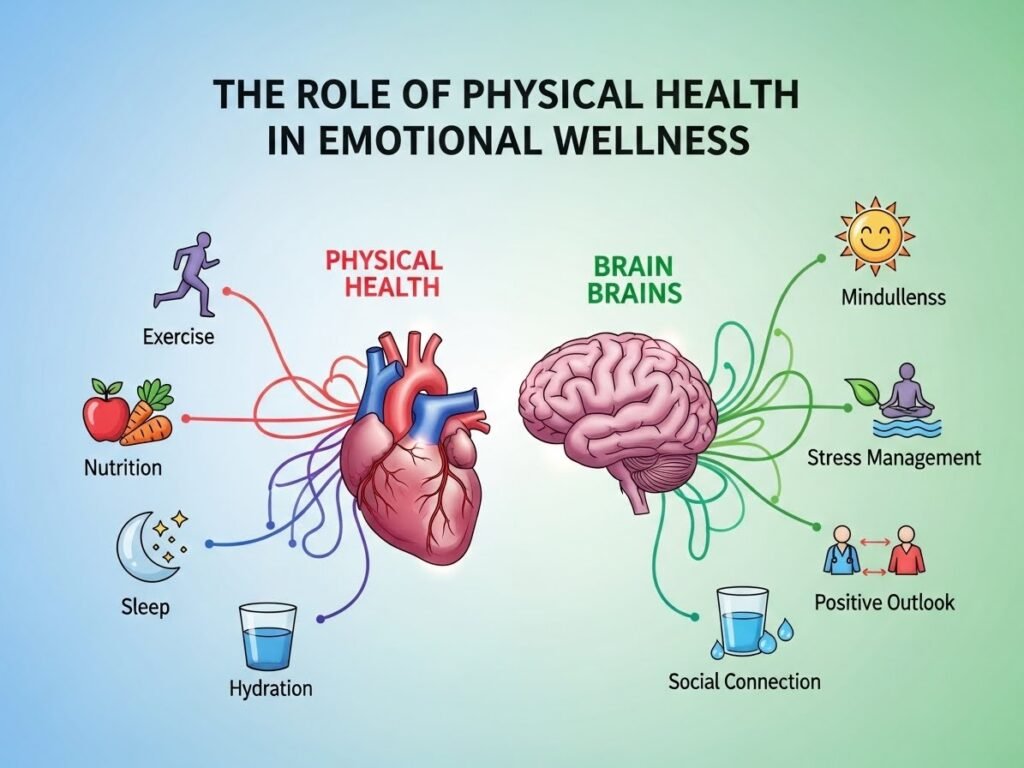
Physical and emotional health are deeply connected. When the body is cared for, emotional well-being improves naturally.
Physical Activity and Mental Health
Regular physical activity:
* Boosts mood
* Reduces stress
* Supports mental and physical health
* Improves overall well-being
You don’t need intense exercise. Gentle movement works too.
Examples:
* Walking outdoors
* Stretching
* Low-impact workouts
* Yoga or light strength training
Movement helps release stress stored in the body.
Daily Habits That Improve Emotional Well-being
Emotional wellness is built through daily habits, not big changes. Small actions practiced consistently support mental health and well-being.
Healthy Habits to Support Emotional Wellness
* Keep a simple daily routine
* Eat a balanced, healthy diet
* Stay hydrated
* Limit constant digital stimulation
* Spend time in natural light
These habits reduce stress and improve mental wellness over time.
Managing Stress Without Overwhelm
Stress is part of life, but how you respond to it matters.
Strategies to Manage Stress
* Break tasks into smaller steps
* Practice deep breathing during tense moments
* Set realistic expectations
* Take short mental breaks
Managing stress helps protect emotional well-being and reduces anxiety.
Support your mental health naturally—start using this trusted solution now.
Emotional Wellness During Difficult Times

Life includes loss, uncertainty, and change. Emotional wellness helps you cope without shutting down.
Ways to Cope During Difficult Times
* Acknowledge your feelings without judgment
* Stay connected to supportive people
* Keep basic self-care routines
* Ask for help when needed
Resiliency grows through support and compassion, not isolation.
The Importance of Social Connection and Belonging
A sense of belonging improves mental health and emotional well-being.
Healthy connections:
* Reduce feelings of isolation
* Improve emotional health
* Support mental and emotional balance
Even small interactions matter—checking in with a friend or sharing a moment of honesty can boost your mood.
Building a Personal Emotional Wellness Toolkit
A wellness toolkit is a set of resources and habits you can return to when stress rises.
What to Include in Your Toolkit
* Mindfulness exercises
* Movement you enjoy
* Journaling prompts
* Relaxing music or apps
* Gratitude practices
Wellness resources help you respond instead of react.
Emotional Wellness Tips for Daily Life
Here are simple, effective tips you can apply right away:
* Start your day with one calm habit
* Notice emotional triggers without self-criticism
* Practice gratitude before bed
* Limit multitasking
* Protect your rest
These steps enhance your mental well-being without putting pressure on you.
Nutrition and Emotional Health
Eating healthy supports both mental and physical health.
A healthy diet helps:
* Stabilize mood
* Support energy levels
* Improve focus and emotional balance
Focus on regular meals, whole foods, and listening to your body.
Feel better every day—click here to access the wellness resource people are loving.
When Emotional Wellness Feels Challenging
There may be times when emotional struggles feel heavier. If anxiety, isolation, or distress interfere with daily life, seeking support from a qualified specialist or clinician can be part of a healthy wellness journey.
Asking for help is a strength—not a failure.
Related Articles:
[Depression Support and Long-Term Resilience]
[Depression Support Through Lifestyle Changes]
Frequently Asked Questions (FAQ)
What is emotional wellness?
Emotional wellness is the ability to understand, manage, and express emotions in healthy ways.
How does emotional wellness improve mental health?
It helps reduce stress, manage anxiety, and build emotional resilience.
Can lifestyle changes really boost mental well-being?
Yes. Small, consistent habits have a strong impact on mental and emotional health.
Is mindfulness helpful for anxiety?
Mindfulness helps calm the nervous system and improves awareness of thoughts and feelings.
How long does it take to feel results?
Some people notice benefits within days, while bigger changes develop over weeks.
Does physical activity really affect emotional health?
Yes. Movement supports mood, stress relief, and overall mental wellness.
Conclusion: A Healthier, More Balanced You
Boosting mental health and well-being starts with emotional wellness. You don’t need perfection or dramatic changes. By practicing mindfulness, supporting physical health, managing stress, and building simple habits, you create a foundation for long-term mental and emotional balance.
Emotional wellness is a journey—one step, one habit, one moment of awareness at a time.
Disclaimer:
This content is for educational purposes only and is not medical advice.