
Acid Reflux, GERD, and Heartburn: Understanding Stomach Acid and Natural Relief


Introduction: When Digestion Starts to Feel Uncomfortable
Many people experience heartburn or acid reflux at some point, often after a heavy meal or a stressful day. That familiar burning feeling in the chest can be uncomfortable and distracting, especially when it shows up at night or becomes frequent. Over time, repeated symptoms may be described as GERD, also known as gastroesophageal reflux disease.
Understanding how stomach acid works—and why it sometimes flows where it should not—can help you make better daily choices. This article explores acid reflux, GERD, and heartburn from a lifestyle and body-mind wellness perspective, focusing on awareness, prevention, and practical habits that may help relieve symptoms naturally.
Acid Reflux, GERD, and Heartburn Explained
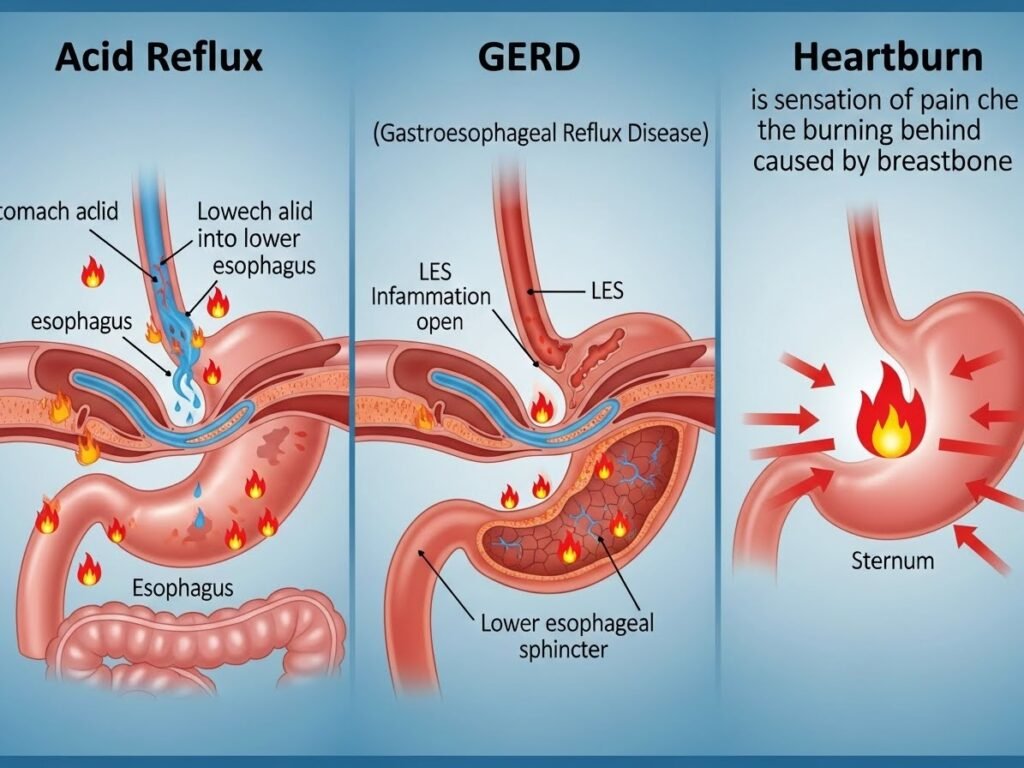
Acid reflux happens when stomach acid flows back into the esophagus. The esophagus is the tube that connects the mouth to the stomach. This backward flow can irritate the lining of the esophagus and cause heartburn.
GERD, or gastroesophageal reflux disease, is often used to describe chronic acid reflux. When reflux symptoms happen often or last a long time, they may affect comfort, sleep, and digestion.
Heartburn is a symptom, not a condition. It is the burning sensation many people feel in the chest or throat when stomach acid backs up.
Understanding Stomach Acid and Digestion
Why Stomach Acid Is Important
Stomach acid, also called gastric acid or hydrochloric acid, plays a key role in digestion. It helps break down food and supports nutrient absorption.
Problems usually happen not because acid exists, but because stomach acid flows back into the wrong place.
The Role of the Lower Esophageal Sphincter
The lower esophageal sphincter is a small muscle between the stomach and esophagus. It opens to let food pass into the stomach and closes to keep stomach contents from coming back up.
When this muscle weakens or relaxes at the wrong time, acid reflux happens.
Support your digestive comfort naturally: Explore our recommended gut-friendly products designed to help balance stomach acid and promote everyday digestive wellness >>>>>Click Here
Acid Reflux and GERD — What’s the Difference?
Acid reflux can be occasional and mild. Many people experience it after certain foods or large meals.
GERD refers to frequent or chronic acid reflux. People with GERD may notice symptoms several times a week or symptoms that affect daily life.
Key differences:
* Occasional acid reflux: happens from time to time
* Chronic acid reflux (GERD): happens often and lasts longer
Both involve stomach acid flowing back into the esophagus.
Symptoms of Acid Reflux and Heartburn
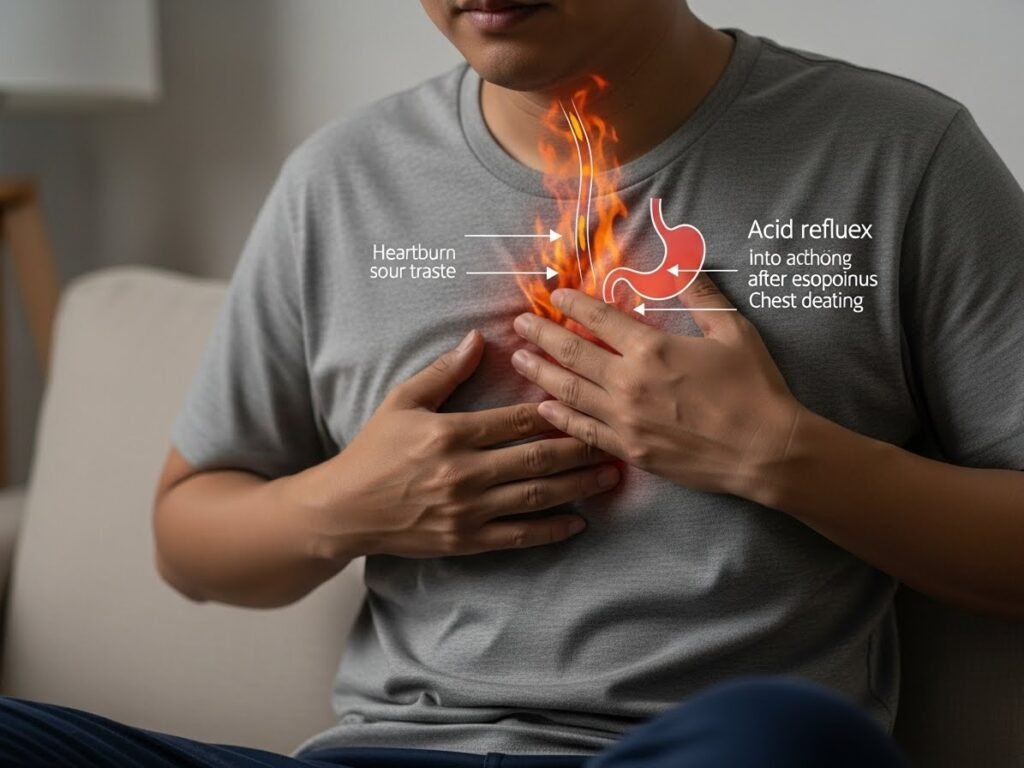
Symptoms of Acid Reflux
Symptoms can vary from person to person. Some are mild, while others feel more intense.
Common acid reflux symptoms include:
* Heartburn (burning chest pain)
* Sour or bitter taste in the mouth
* Acid into the esophagus after eating
* Discomfort is worse at night
* Chest pain that is not related to the heart
* Shortness of breath in some cases
Chronic symptoms should not be ignored, even if they come and go.
High Stomach Acid Symptoms and Triggers
High stomach acid symptoms may overlap with reflux symptoms. An increase in stomach acid or pressure on the stomach can contribute to reflux.
Things that may cause or worsen symptoms:
* Large or late meals
* Fatty foods
* Spicy foods
* Acidic foods and drinks
* Stress and poor sleep
* Pressure on the stomach from tight clothing
Upgrade your daily routine: Discover carefully selected supplements, teas, and wellness tools that may help reduce acid reflux discomfort and support healthy digestion >>>>>Click Here
What Causes Heartburn and Acid Reflux?
Symptoms and Causes
Several factors can contribute to acid reflux and GERD. Often, it is a mix of digestion habits and lifestyle patterns.
Common causes include:
* Delayed stomach emptying
* Weak lower esophageal sphincter
* Excess stomach acid
* Stomach pushes acid upward after meals
* Lying down too soon after eating
Some conditions can cause your body to produce more stomach acid, while others affect how the stomach and esophagus work together.
Foods and Drinks That May Cause Heartburn
Certain foods and drinks are more likely to cause reflux.
Foods you should avoid if symptoms are frequent:
* High-fat meals
* Fried foods
* Chocolate
* Coffee and caffeinated drinks
* Alcohol
* Carbonated beverages
These foods may irritate the esophagus or increase stomach acid production.
Foods That Help Prevent Acid Reflux
Not all foods trigger reflux. Some foods may help neutralize stomach acid or support digestion.
Foods that help prevent acid reflux include:
* Alkaline foods like bananas and melons
* Fibrous foods such as oats and vegetables
* Lean proteins
* Whole grains
* Non-citrus fruits
A balanced, gentle diet can reduce acid reflux symptoms over time.
Lifestyle Changes That Help Prevent Acid Reflux

Help Prevent Acid Reflux Naturally
Lifestyle changes are often the first step in managing reflux.
Practical lifestyle tips:
* Eat smaller meals
* Avoid eating late at night
* Raise the head of your bed
* Stay upright after eating
* Maintain a healthy weight
These steps reduce pressure on the stomach and help keep acid where it belongs.
Take the next step toward relief: Check out our trusted digestive wellness solutions chosen for people looking to manage heartburn naturally through lifestyle support >>>>>Click Here
GERD and Nighttime Symptoms
Many people find their symptoms worse at night. When lying flat, stomach acid flows back more easily into the esophagus.
Helpful habits for nighttime relief:
* Elevate the head of your bed
* Avoid heavy dinners
* Limit acidic foods in the evening
* Sleep on your left side if comfortable
These habits may help reduce symptoms and improve sleep quality.
Treatment Options: Lifestyle First
Treatment Options Without Medical Claims
Treatment options often start with lifestyle changes. Some people also use over-the-counter medications such as antacids, acid blockers, or proton pump inhibitors.
While medications may help neutralize stomach acid or reduce acid production, lifestyle habits remain an important foundation.
**Note:** Long-term use of some acid blockers may be linked to rebound acid hypersecretion, where the stomach produces more acid after stopping.
Acid Reflux or GERD: When Awareness Matters
People with GERD may experience ongoing irritation of the lining of the esophagus. Over time, acid irritates the esophagus and may lead to discomfort known as esophagitis.
Being aware of symptoms helps you take action early through diet, habits, and professional guidance when needed.

Actionable Daily Tips to Reduce Acid Reflux
* Eat slowly and chew well
* Drink water between meals, not during
* Avoid tight clothing around the stomach
* Practice stress reduction
* Keep a simple food and symptom journal
These steps help identify triggers and support better digestion.
FAQ: Common Questions About GERD and Heartburn
1. What is the main cause of acid reflux?
Acid reflux happens when stomach acid flows back into the esophagus due to muscle weakness or pressure on the stomach.
2. Is heartburn the same as GERD?
Heartburn is a symptom. GERD refers to frequent or chronic acid reflux.
3. Can diet really help reduce acid reflux?
Yes, food choices play a major role in reducing symptoms.
4. Why is acid reflux worse at night?
Lying down allows stomach acid to flow back more easily into the esophagus.
5. Are alkaline foods helpful?
Alkaline foods may help balance acidity and reduce irritation.
6. Can stress cause acid reflux?
Stress can affect digestion and contribute to reflux symptoms.
Conclusion: Small Changes, Better Digestive Comfort
Acid reflux, GERD, and heartburn are common, but they do not have to control your daily life. Understanding how stomach acid works and how lifestyle habits influence digestion gives you practical tools to feel better.
By adjusting what you eat, how you eat, and how you care for your body, you can reduce discomfort and support long-term digestive wellness. Small, consistent steps often lead to meaningful improvements.
Disclaimer:
*This content is for educational purposes only and is not medical advice.*