
The Mind-Body Connection Behind Energy Levels: Natural Ways to Improve Focus, Mood, and Daily Vitality

The Mind-Body Connection Behind Energy Levels
Energy is often viewed as something purely physical. Many people assume low energy only comes from poor sleep, lack of exercise, or busy schedules. But daily vitality is influenced by much more than physical activity alone.
The body and mind constantly affect each other. Stress can create physical exhaustion. Poor sleep can reduce emotional resilience. Mental overload may lead to fatigue even after a quiet day.
Likewise, movement, relaxation, positive routines, and emotional balance can improve both physical and mental energy.
This relationship is known as the mind-body connection.
More people are beginning to realize that energy levels are closely linked to mental wellness, recovery habits, emotional balance, sleep quality, and lifestyle routines. When the mind feels overwhelmed, the body often feels drained as well.
The good news is that small daily habits may help support both mental clarity and physical vitality naturally. Better recovery, movement, stress management, healthy routines, and balanced wellness habits often improve energy over time.
This guide explores the mind-body connection behind energy levels while sharing practical ways to support focus, resilience, and daily wellness naturally.

Understanding the Mind-Body Connection Behind Energy Levels
The mind and body work together continuously.
Mental stress may influence physical fatigue, while physical exhaustion may affect mood and motivation.
Many daily factors affect this connection, including:
* Sleep quality
* Stress levels
* Emotional balance
* Physical movement
* Nutrition habits
* Screen time
* Recovery routines
When these areas become unbalanced, energy often decreases.
Common signs include:
* Brain fog
* Mental exhaustion
* Poor concentration
* Physical fatigue
* Mood changes
* Reduced motivation
* Difficulty relaxing
Energy is rarely influenced by one single factor alone.
How Stress Impacts Mental and Physical Energy
Stress is one of the biggest hidden energy drains in modern life.
Many people remain mentally active all day without realizing how much pressure the brain is handling.
Examples include:
* Work deadlines
* Constant notifications
* Financial concerns
* Social media overload
* Family responsibilities
* Multitasking
Even when sitting still physically, the brain may stay in a constant “alert mode.”
Over time, this mental pressure may contribute to:
* Emotional fatigue
* Poor sleep quality
* Low motivation
* Difficulty focusing
* Physical exhaustion
#Practical example:
Someone working long hours while constantly checking emails may feel drained even without intense physical activity.
Why Sleep Is Essential for Mind-Body Recovery
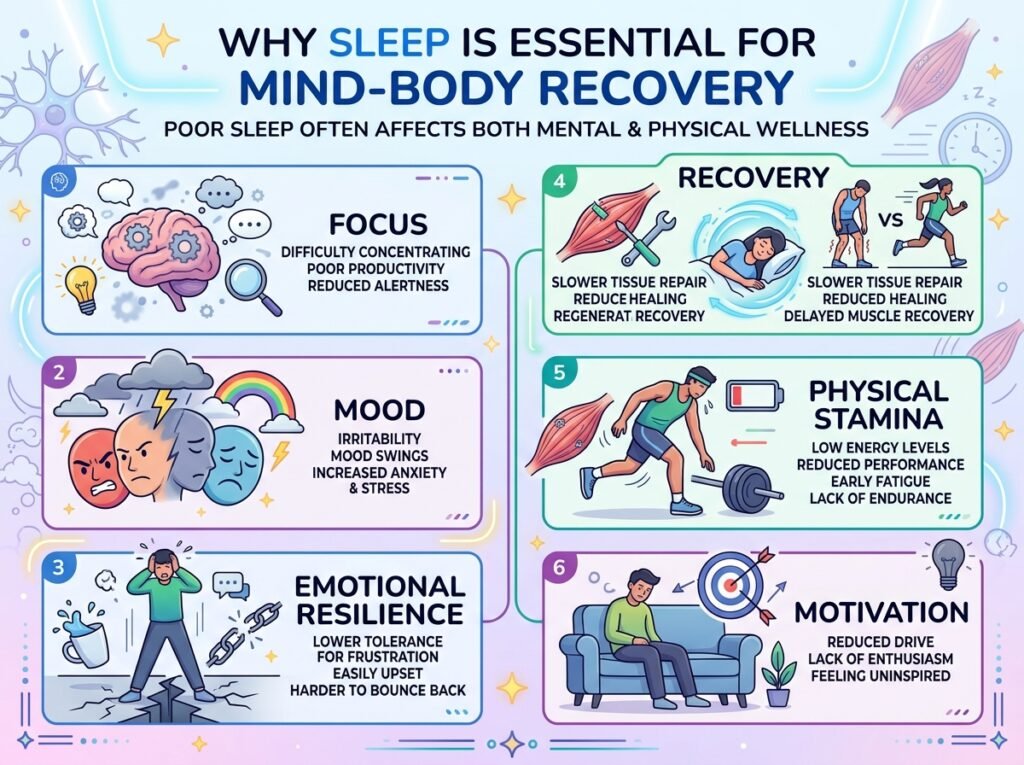
Sleep strongly influences both mental and physical wellness.
Poor sleep often affects:
* Focus
* Mood
* Emotional resilience
* Recovery
* Physical stamina
* Motivation
Many people try to overcome fatigue with caffeine, but recovery cannot fully happen without quality sleep.
Signs Poor Sleep Is Affecting Your Energy
Common signs include:
* Waking up tired
* Afternoon crashes
* Brain fog
* Irritability
* Low productivity
* Heavy caffeine dependence
#Practical example:
A person sleeping only five hours regularly may feel emotionally overwhelmed more easily during stressful situations.
The Role of Movement in Mental and Physical Energy
Movement supports much more than physical fitness.
Regular activity may also help support:
* Mood balance
* Mental clarity
* Emotional resilience
* Better sleep
* Daily motivation
Exercise increases circulation and may help reduce feelings of mental stagnation.
Helpful Types of Movement
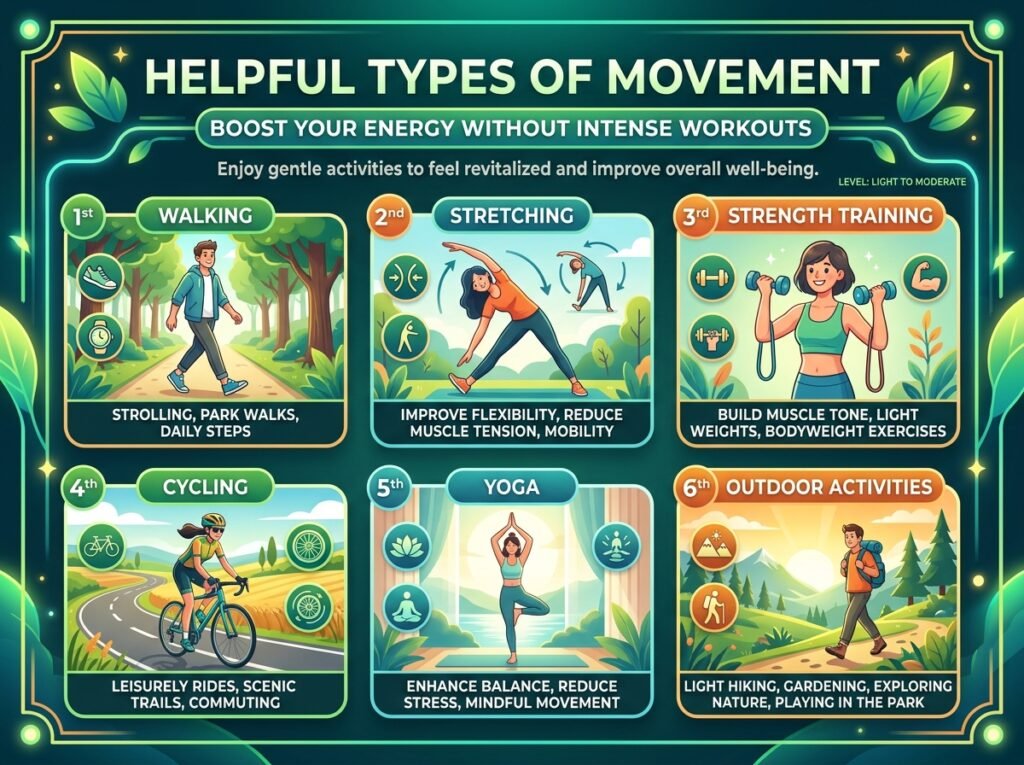
You do not need intense workouts to improve energy.
Helpful activities include:
* Walking
* Stretching
* Strength training
* Cycling
* Yoga
* Outdoor activities
Consistency matters more than perfection.
⚡ Feeling mentally drained, emotionally exhausted, or physically tired? Discover premium supplements that may help support balanced energy, mental clarity, and healthier recovery routines. >>>>> Click Here
Nutrition and Hydration Affect the Mind and Body Together
Food choices influence both physical and mental performance.
Unbalanced eating habits may contribute to:
* Low energy
* Mood swings
* Poor concentration
* Afternoon fatigue
Hydration also plays an important role in focus and energy balance.
Simple Nutrition Habits That Support Energy
Helpful habits include:
* Eating balanced meals
* Including protein and healthy fats
* Drinking enough water
* Reducing excessive sugar intake
* Limiting highly processed foods
#Practical example:
Someone replacing sugary snacks with balanced meals may notice steadier energy throughout the day.
Digital Overload and Mental Fatigue
Modern technology keeps many people mentally stimulated all day.
Constant scrolling, notifications, and multitasking may quietly increase stress and reduce focus.
Over time, digital overload may contribute to:
* Reduced attention span
* Mental exhaustion
* Poor sleep quality
* Emotional fatigue
Simple Digital Detox Habits
Helpful ideas include:
* Turning off unnecessary notifications
* Creating screen-free time before bed
* Taking social media breaks
* Spending more time outdoors
Mental recovery often improves when the brain has quiet time.
Customer Reviews and Real-Life Experiences
Customer Reviews
People who improve mind-body wellness habits often report:
* Better focus
* More stable energy
* Improved sleep quality
* Better emotional balance
* Reduced mental fatigue
* More motivation and productivity
Examples include:
* A remote worker improving concentration through better sleep and movement breaks.
* A parent reducing emotional exhaustion through stress-management routines.
* A professional feels more energized after limiting nighttime screen exposure.
Most improvements happen gradually through consistent lifestyle changes.
Natural Wellness Supplements Often Used for Energy Support
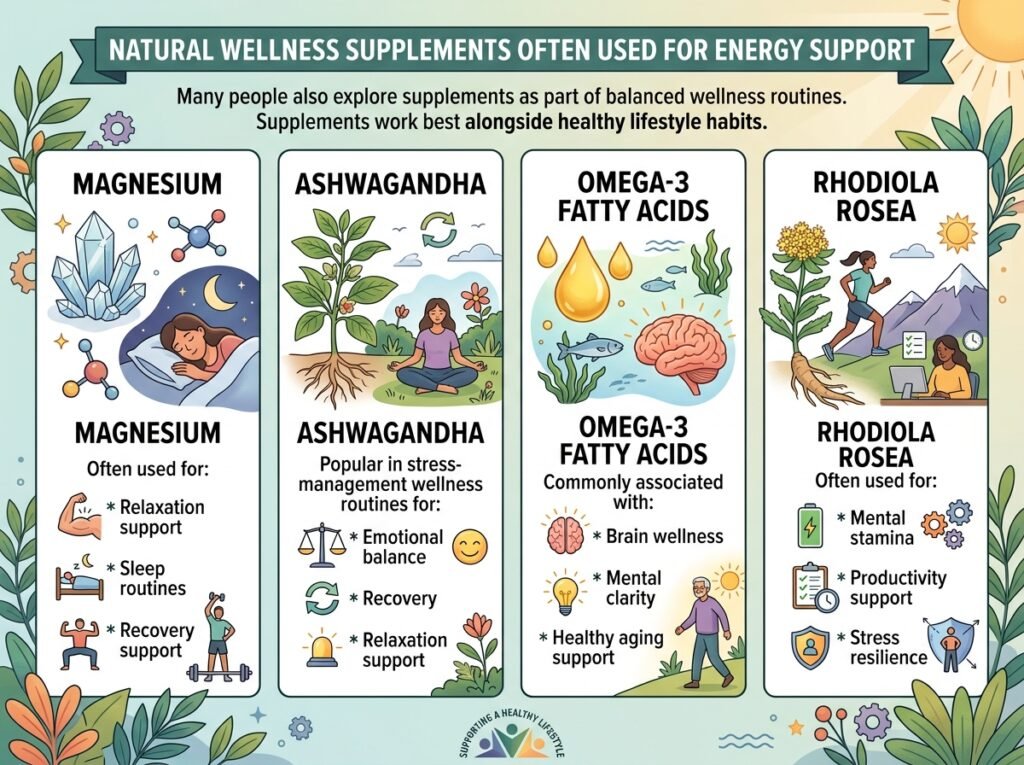
Many people also explore supplements as part of balanced wellness routines.
Supplements work best alongside healthy lifestyle habits.
Magnesium
Often used for:
* Relaxation support
* Sleep routines
* Recovery support
Ashwagandha
Popular in stress-management wellness routines for:
* Emotional balance
* Recovery
* Relaxation support
Omega-3 Fatty Acids
Commonly associated with:
* Brain wellness
* Mental clarity
* Healthy aging support
Rhodiola Rosea
Often used for:
* Mental stamina
* Productivity support
* Stress resilience
Small Habits That Improve Energy Naturally
Energy often improves through small daily actions rather than extreme changes.
Helpful habits include:
* Going outside daily
* Walking regularly
* Sleeping consistently
* Reducing mental clutter
* Practicing mindfulness
* Drinking enough water
* Creating healthier routines
Simple routines repeated consistently may create meaningful long-term improvements.
💪 Small lifestyle changes can make a big difference — and the right supplements may help support your body and mind for more energy, resilience, and motivation every day. >>>>> Click Here
Internal Linking Suggestions
You may internally link this article to:
* [Digital Detox for Mental Wellness and Health]
* [Supplements to Increase Deep Sleep]
* [Morning and Evening Routine for Better Focus]
# h2: External Reference Suggestions
For additional credibility and learning, reference trusted sources such as:
* Wellness and healthy aging organizations
* Sleep health resources
* Mental wellness publications
FAQs: The Mind-Body Connection Behind Energy Levels
What is the mind-body connection?
The mind-body connection refers to how mental and emotional states influence physical health and energy, and how physical wellness affects mood and mental clarity.
Can stress cause physical fatigue?
Yes. Ongoing stress may contribute to mental exhaustion, poor sleep, and reduced physical energy.
Why does poor sleep affect mood and focus?
Sleep strongly influences emotional balance, recovery, mental clarity, and overall resilience.
Does exercise help mental energy?
Regular movement may support mood balance, mental focus, and stress management.
Can screen time reduce energy?
Excessive screen exposure and digital overload may contribute to mental fatigue and poor sleep habits.
Are supplements enough to improve energy naturally?
Supplements may support wellness, but healthy habits like sleep, movement, nutrition, and stress management remain essential.
How long does it take to feel more energized?
Many people notice gradual improvements after consistently improving sleep, recovery, movement, and daily routines.
When Should You See a Doctor?
While occasional fatigue, low motivation, or mental exhaustion can often be improved through healthy lifestyle habits, persistent symptoms may sometimes indicate an underlying health condition. Consider consulting a healthcare professional if you experience:
- Ongoing fatigue or low energy that does not improve with adequate sleep, nutrition, and rest
- Persistent brain fog, memory problems, or difficulty concentrating that interferes with daily activities
- Chronic sleep disturbances, such as insomnia, frequent nighttime awakenings, or excessive daytime sleepiness
- Unexplained weight loss or weight gain without significant lifestyle changes
- Frequent feelings of anxiety, depression, or emotional distress that affect your quality of life
- Shortness of breath, chest pain, dizziness, or heart palpitations, along with low energy or fatigue
- A noticeable decline in physical stamina or daily functioning that continues to worsen over time
In some cases, low energy and reduced well-being may be linked to conditions such as sleep disorders, thyroid problems, nutritional deficiencies, chronic stress, depression, anxiety, hormonal imbalances, or other medical concerns. A healthcare professional can help identify potential causes and recommend appropriate treatment or support.
Seeking medical advice early can help protect your long-term health and improve both mental and physical well-being.
Conclusion: The Mind-Body Connection Behind Energy Levels
Energy levels are influenced by much more than physical activity alone. Mental stress, emotional balance, sleep quality, recovery habits, movement, nutrition, and digital overload all affect how energized a person feels each day.
The mind and body constantly work together. When one area becomes overwhelmed, the other often feels the impact as well.
The good news is that small, consistent lifestyle improvements may help support better focus, emotional resilience, recovery, and daily vitality naturally.
Long-term energy is often built through balanced routines, healthier recovery habits, movement, stress management, and mindful daily choices.
Small habits practiced consistently usually create the strongest long-term results.
Medical References:
* National Institute of Mental Health (NIMH). Resources on stress, mental health, and emotional well-being.
* Mayo Clinic. Stress Management and Healthy Lifestyle Resources.
* Harvard Health Publishing. Articles on the Mind-Body Connection, Sleep, Exercise, and Wellness.
* American Psychological Association (APA). Stress and Health Resources.
* National Sleep Foundation. Sleep, Recovery, and Energy Performance Information.
These references support the key topics covered in your article, including stress, sleep quality, emotional balance, mental fatigue, physical energy, recovery, and the relationship between mental and physical well-being.
Disclaimer
This content is for educational purposes only and is not medical advice.
Discover more insights on mindful living, mental clarity, and holistic wellness by visiting mindbodyshifts.com.
Explore our latest articles and practical ideas designed to help you create meaningful mind–body balance in everyday life.